How to Trim Dogs Nails
One of the key parts of being a dog owner is maintaining your dog’s health, both inside and out. This not only includes regular grooming but also trimming your dog’s nails when necessary. In this blog, we’re going to talk you through how best to trim your dog’s nails, including when you should do it, and what happens if you don’t trim your dog's nails.
How Often To Trim Dog Nails?
You should be lookig to trim your dog's nails at least once every four weeks. This timing is generic, though, and if you dog spends a lot of time outdoors or walking on harder surfaces (such as pavements), they may not need them trimmed as often.
If you're unsure if your dog's nailed need to be trimmed, then listen carefully when your dog walks on a hard-wood or tiled floor. Can you hear the little clicks and clacks of their nails on the floor? Then it's time for a nail trim.
How to Trim Your Dog's Nails
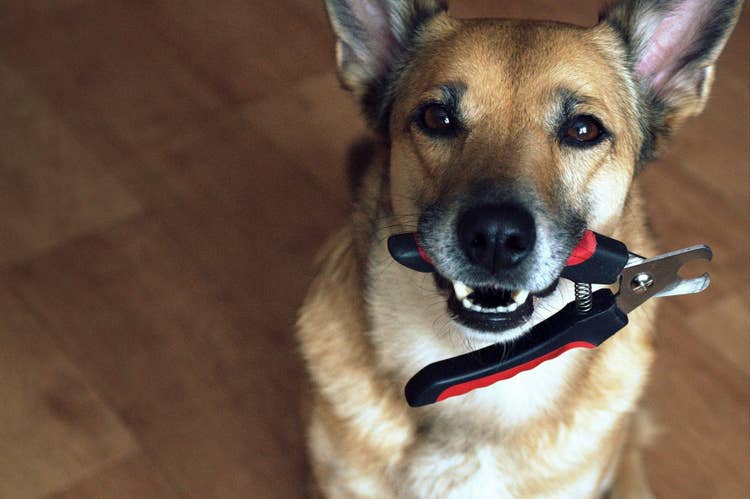
Before we get started on explaing how to trim your dog's nails, first we need to look at the equipment needed. For the best results, we recommend:
- A pair of dog nail clippers, such as these BUSTER Nail Clippers for Dogs.
- A dog nail file, like this Mikki Claw File
- A paw balm or butter, like this Be:Loved Be:soft Soothing & Nourishing Pet Paw Balm.
- A pair of dog grooming scissors (if you have a long-haired dog)
- Plenty of dog treats to reward good behaviour!
Now you've got all the necessary equipment, it's time to learn how to trim yr dog's nails step-by-step:
- Choose a time when your dog is calm, relaxed, and happy to sit still for 10-20 minutes. After a nap can be a good time if your dog is particularly excitable.
- Hold your dog steady in a seated position. Depending on its size and temperament, you may need someone else to help so you have free hands to work with.
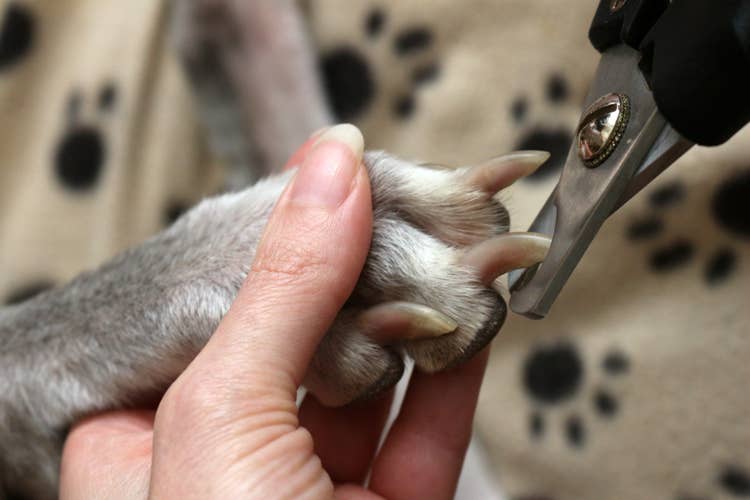
- Extend your dog's nail - to do this, lift your dog's paw and press your thumb against the pad of their first toe and pull gently downwards. You should see their claw extend slightly from the natural position.
- Position the clippers around the claw - you should adjust the clippers so the blades are cutting from top to bottom. Aim for a 45° angle.
- Snip off the tip of your dog's nail while avoiding the quick (the pink part of the nail containing blood vessels). If you're not confident, start with the very tip of the nail and snip off bit by bit until you're satisfied with the length.
- Repeat for all nails on your dog's paw - hind limbs only have four claws, but front paws have four regular claws and a dewclaw (like a thumb) on the inner side, a little higher up the limb.
- File down any sharp or jagged edges.
- (Optional) Apply some paw balm to your dog's paw pads and massage until absorbed.
- Reward your dog for a job well done!
- Repeat process on remaining paws.
And that's all there is to it!
Every dog is different, and your dog's breed may impact aspects of their anatomy, such as whether or not they have a dewclaw on their hind limbs as well as the front (common in large and extra large dog breeds), or if they have double dewclaws (like the Great Pyrenees, Icelandic Sheepdog, or Beauceron)!
If you're not confident in trimming your dog's nails yourself, you can ask your vet at your next appointment if they will do it for you or show you how to do it properly.
How Short to Trim Dogs Nails?
You want to aim to cut your dog's nails approximately 2mm from the quick. This will remove the bulk of your dog's nail hile still leaving enough behind to protect the quick, especially if you're filing them afterwards.
How to Find the Quick in Dog Nails
As we've mentioned, the quick is the soft tissue part of your dog's nail, full of blood vessels and nerves. It's incredibly painful for your dog if you cut the quick, and they also end up bleeding a lot, which can be distressing for you and your dog.
To find the quick:
- Press gently on your dog's paw pad to extend the nail.
- Look for the darker, pinkish part of your dog's nail - this is the quick.
- Holding your dog's paw against the light can help identify the quick. (Dog claws are made of keratin, the same stuff that makes up human nails, which is semi-translucent, so light will shine partially through, revealing the quick inside.)
How to Trim Dog Nails That Are Black
Black dog claws can be tricky to cut since the quick isn't visible like in lighter claws, and shining a light might not help.
When trimming black dog nails, you need to take a much more gentle approach. Start with tiny snips off the end of the nail before it begins to curve, and gently work backwards towards the desired length. With each snip, take a look at your dog's claw head-on. You may notice white markings on the inside of your dog's claw, which is dead keratin which should be removed, but stop if you spot a dark spot in the centre of the nail. This will be the quick and your sign to stop trimming.
Some dogs might have a mix of black and pale nails, in which case, you can use the light trick to find the quick, and then mark the spot with a marker to use as a guide.
Remember, you can always ask your vet for help if you're not confident clipping black dog nails, or ask a groomer to do it during a routine grooming appointment.
How to Stop a Dog's Nail From Bleeding
Even the most well-practised dog groomers might nick the quick from time to time. Accidents happen, and some dogs don't like sitting still long enough to get a clean cut. The key to stay calm and following these simple dog first-aid tips:
- Compress the wound with a clean cloth or paper towel until the bleeding stops. You can also use a silver nitrate pencil, such as these Quick-Stop Silver Nitrate Pencils, to cauterise the wound and stop bleeding quickly.
- Wash the area with lukewarm water to rinse off remaining blood.
- Apply a dog-safe antiseptic like this Charlie the Vet Wound Spray.
- Wrap the affected paw with a bandage or use a dog recovery boot to prevent your dog from licking the wound and to stop further irritation.
While most quick cuts clot well on their own, you should take your dog to the vet if:
- The bleeding doesn't stop after 20 minutes.
- Your dog's toe or paw begins to swell.
- Your dog's condition doesn't improve within a couple of days.
Overgrown Dog Nails
Dog nail trimming is essential to any grooming routine, as dogs' claws are integral for maintaining traction with the ground. If you leave your dog's claws to become overgrown, they may face issues like:
- Splayed feet
- Reduced traction
- Deformed paws
- Tendon damage (in extreme cases)
- Embedded nails (these occur when your dog's nail continues to grow and curve inwards until it punctures your dog's paw)
Each of these issues is preventable with a dog nail trimming routine to prevent overgrown dog nails.
Trimming your dog’s nails doesn’t need to be a chore, and with the proper reinforcement and reward for your dog, they should be pretty happy to let you clip their nails. If you struggle to trim your dog’s claws, consult a professional dog groomer or ask your vet for advice.
You can find all the dog grooming essentials you need, including dog nail clippers, right here at Pet Drugs Online to keep your dog happy and healthy, inside and out.

This post is an opinion and should only be used as a guide. You should discuss any change to your pet’s care or lifestyle thoroughly with your vet before starting any program or treatment.
