How to Walk Dogs Near Livestock
There’s no better way to welcome springtime than with a lovely countryside dog walk, but what is spring known for if not new life? Cows, sheep and other livestock often return to the field with their newborn young in tow, which can make real problems for unsavvy dog walkers both legally and in terms of your pet’s safety.
In this guide, we will talk you through walking your dog on public footpaths and how to safely walk your dog near or around livestock.
Contents:
- Dogs and Public Right of Way
- Tips for walking your dog near livestock
- Do dogs need to be kept on a lead around livestock?
What is a Public Footpath?
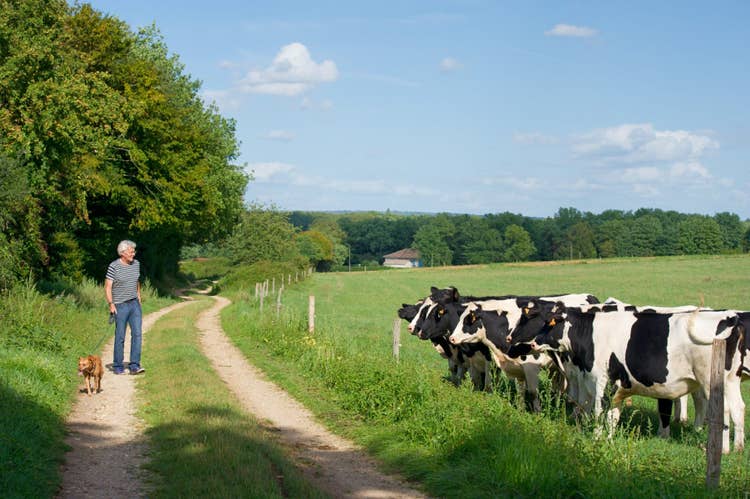
A public footpath (also known as a public right of way) is a path where anyone has the legal right to walk along the path or use a mobility scooter as well as some other forms of transport as a means of getting somewhere or just for the walk.
While walking on a public footpath, you have the right to pass and repass along the path and can stop to admire the beautiful British countryside so long as you stay on the path and don’t cause an obstruction to others. You can also bring what’s known as a “natural accompaniment”, which refers to anything a walker may bring with them, such as a pram, a pushchair and even a dog. This means that dog walking on public footpaths is allowed.
There are over 140,000 miles of public rights of way across the UK, many of which run through fields and land owned by farmers. This means that oftentimes there will be livestock in fields regardless of public right of way.
Top 10 Tips For Walking Your Dog Near Livestock
Walking your dog is a must, and as the days get longer, so may your walks, and if you live in the countryside, there’re so many lush green spaces that your dog would love! However, running into livestock is almost inevitable at this time of year, so here are some of our tips on how to keep your dog safe while walking near livestock:
1. Stick to The Public Right of Way
Not only is walking on a farmer's private land considered trespassing, but you’re also more likely to encounter livestock that are uncomfortable around people or unfamiliar animals than you would on a public footpath.
2. Stick to the Paths
Paths along a public right of way are made specifically to allow people to walk through as efficiently as possible, and the protections given when walking on a public footpath only apply if you stick to the path.
3. Keep Your Dog On-Lead
Even if your dog is well-behaved with perfect recall training, there is always a chance that a fast-moving lamb or rabbit could excite them enough to take chase. Keeping your dog on a lead in these areas is safer for your dog and the resident livestock.
4. Stay Vigilant
Even if a field appears empty, livestock may be somewhere you can’t see, such as sheltering under a hedge, or behind bushes or trees.
Stay aware of your surroundings and monitor the behaviour of both the livestock and your dog. If your dog is pulling or getting over-excited by the presence of livestock, leave the field as soon as possible. We also recommend keeping a dog first aid kit with you when walking away from home in case of any injuries to your pet.
5. Do Not Approach the Livestock
Often, livestock kept on public footpaths are accustomed to people passing through with or without pets and may not react to your presence in the field. However, approaching the livestock may startle them, and if they have offspring, it may lead them to lash out or chase you and your dog.
6. Move Calmly and Quickly
Some animals (particularly cattle and horses) can be inquisitive to a new presence in their field or may think you’re bringing them food. While they likely won't get too close, try to walk around the herd or flock and keep your distance.
7. Close all Gates Behind You
Farmers tend to keep livestock in separate fields for a reason, and leaving previously closed gates open behind you can cause catastrophic consequences for the farmer's livelihood.
For example, leaving a closed gate open could allow a bull or a ram into a field with a female flock or herd intended for sale, not breeding, resulting in unwanted pregnancies that mean those animals can no longer be sold.
In farming, the value of livestock can vary each year based on whether other farmers are buying yearlings (livestock that have reached breeding age but are under two years old) or mature breeding sheep. The farmer will have planned the breeding and sale of their sheep or cattle accordingly, but mistakes from public walkers can ruin this and lead to a loss of income for the farmer.
8. Adhere to Any and All Signs or Warnings
Farmers or local authorities may put up signs requesting dogs not be brought into certain fields. You should always follow the guidance on these signs as it's for the safety of either your dog or the famers livestock (or even both) as the animals in the field may be pregnant, or even hostile.
Livestock with young offsprig may also be particularly protective of their young and reactive to a dog's prescence, regardless of how well behaved. If you ever see lambs, calves, foals, or any other baby animals in a field, it's best to find a different route.
If farmer has requested you not to bring your dog into a field containing a public right of way, they should provide an alternate route, but this may not always be possible.
9. Never Put Yourself at Risk
If livestock ever begins to charge towards you, release your dog and get to safety as quickly as possible over a fence or through a gate.
Chances are, the livestock are chasing your dog, not you, and your dog will be able to outrun them much more easily than you will.
10. Clean Up After Your Dog
You must clean up after yourself and your dog when walking through a public right-of-way. Not only is this common courtesy on any public route, but animals in the field may eat whatever you or your dog leave behind, which could impact the health of the livestock.
By following our top tips, you can have peace of mind that you are doing everything you can to keep yourself and your dog safe while also ensuring you don't disturb any livestock.
Do Dogs Have To Be On A Lead Near Livestock?
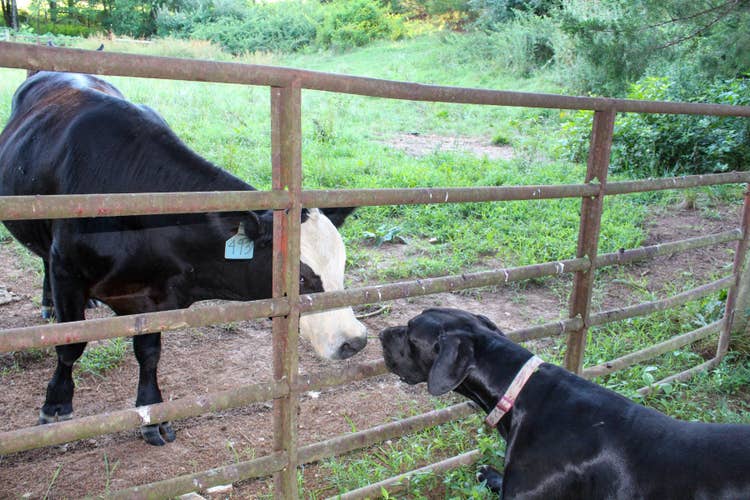
There are no strict laws on keeping your dog on a lead when walking public footpaths (although some local authorities may order it), but it is always recommended you do so for both the safety of your dog and any livestock on the land.
Remember, just because you can’t see any livestock doesn’t mean there isn’t any nearby.
While your dog may be well-behaved in most circumstances, they are, by nature, a predatory species, and sometimes they can’t fight the urge to chase something when it runs away from them (much like when you throw their favourite toy). Plus, many household dogs have never seen or been around livestock animals like cows or sheep, and you can't know how your dog will react to something they've never experienced. This is especially true of young dogs.
If your dog is off-lead when in a field with livestock, they may be unable to resist the temptation to chase, which can have dire consequences, such as:
- Mothers being separated from their young
- Pregnant livestock miscarrying their young
- Livestock being injured as they try to escape
- You or your dog being injured by panicked livestock
- Legal repercussions
Suppose your dog is caught chasing a farmer’s livestock, or causes any stress, injury, or loss of finance because of chasing livestock like sheep or cattle. In that case, you, as the owner (or whoever was walking the dog at the time), are guilty of an offence under the Dogs (Protection of Livestock) Act 1953.
Can Farmers Shoot Dogs?
Dogs, by law, are considered property, so while a farmer shooting your dog for worrying their livestock technically isn’t legal, neither is your dog worrying their livestock in the first place.
Much like dogs, a farmer’s livestock is considered their property, and for many, those livestock are that farmer's primary source of income. This means a farmer has the right to protect their livestock. In some cases, shooting a dog is seen as a lawful thing to do if their livestock is threatened.
It is in your and your pet’s best interest to keep your dog on a lead when walking near livestock or avoiding public footpaths where livestock are present.
The UK has vast, beautiful countryside, and it’s only fair that everyone and their animals should be able to enjoy it without compromising safety. We hope these tips help you feel at ease when walking your dog near livestock and that you can enjoy the birth of spring in the great outdoors.
If you’re planning an outdoor adventure with your dog, why not check out our great range of dog walking and travelling accessories? From collars and leads to travel bowls and poo bags, you can find all the essentials you need here at Pet Drugs Online. Can't find what you need? No worries! Contact us today, and a member of our friendly team will be happy to help.

This post is an opinion and should only be used as a guide. You should discuss any change to your pet’s care or lifestyle thoroughly with your vet before starting any program or treatment.
