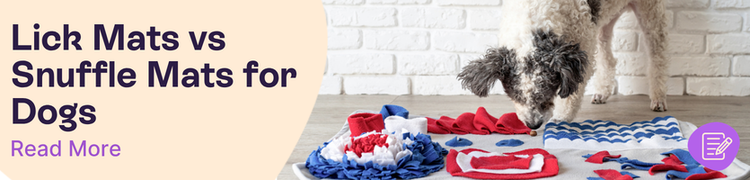
Lick Mats vs Snuffle Mats for Dogs
If your dog’s dinner disappears in seconds or you want to make treat time more interesting, lick mats and snuffle mats are two simple options to try. Both turn food into an activity, but they encourage your dog to use different skills. A lick mat holds wet food or spreadable treats within a textured surface, while a snuffle mat hides kibble or small dry treats between layers of fabric for your dog to sniff out.
The right choice will depend on how your dog likes to explore, what they eat and when you plan to use the mat. This guide explains the differences between lick mats and snuffle mats, which dogs they may suit and how to use them safely.
Reviewed by Hannah Nott BVSc MRCVS
Is a Lick Mat or Snuffle Mat Better for Your Dog?
There is no single winner for every dog, but the following can help you decide where to start:
- Consider choosing a lick mat if your dog enjoys wet food or spreadable treats and you want to offer a quiet, focused activity.
- Consider choosinga snuffle mat if your dog loves using their nose and would enjoy searching for kibble or small dry treats.
- Consider using both if you want to rotate activities and provide different forms of enrichment.
Your dog’s age, eating habits and tendency to chew should also influence your choice.
What Is a Lick Mat for Dogs?
A dog lick mat is a flat feeding mat covered with grooves, ridges or raised patterns. Wet food or a dog-safe spread is pressed across the surface, leaving your dog to lick around the different textures to reach every last bit. This makes the food take longer to eat than it usually would from a standard bowl.
Lick mats provide a relatively quiet form of enrichment. They can make an everyday meal more interesting, encourage dogs to take longer over wet food or provide a tasty distraction during grooming and bathing. Some dogs may also find the repetitive action of licking settling, although a lick mat should not be treated as a solution for ongoing anxiety or behavioural concerns.
Different textures work better with different foods. Fine ridges tend to suit smooth or runnier fillings, while larger pockets can hold thicker food and softened kibble. The LickiMat Classic Soother Slow Feeder, for example, has a textured surface designed to make dogs work their way around the mat.
What Is a Snuffle Mat for Dogs?
A snuffle mat is a fabric feeding toy made with folds, strips or pockets where pieces of dry food can be hidden. Your dog then uses their nose to search through the material and find each piece.
This encourages sniffing and foraging, turning a portion of kibble or a few small treats into a more active activity. It may be particularly appealing to dogs that investigate everything nose-first or show little interest in toys that require them to lick or move puzzle pieces.
The Ancol Örva Square Snuffle Mat allows food to be scattered between sections of fabric. When introducing a snuffle mat, leave the food close to the surface so it is easy to find. You can hide it more deeply once your dog has worked out how the game is played.
Lick Mats vs Snuffle Mats What Are the Main Differences?
The biggest difference is how your dog interacts with the mat. Lick mats keep them focused on a textured surface, while snuffle mats encourage more movement, sniffing and searching.
Lick mat
How it works
- Food is spread or pressed across a textured surface
- Suitable food Wet food, softened kibble and dog-safe pastes or spreads
- Quiet, repetitive and focused activity
- Enhance by using more detailed texture or chill suitable fillings
- Keep it clean Food residue needs to be washed from the textured surface
Snuffle mat
How it works
- Food is scattered between layers of fabric
- Suitable for dry kibble and small treats
- Active, exploratory and scent-led activity
- Hide food more deeply within the fabric
- Crumbs need to be removed and the fabric washed regularly
Which Mat Is Best for Different Dogs and Situations?
Looking at how your dog already eats, plays and explores can help you choose an activity they are likely to enjoy.
Which Is Better for Helping a Dog Settle?
A lick mat will usually be the better option when you want a quiet activity that encourages your dog to stay in one place. It may be useful during grooming, bathing or at times when your dog needs something calm and focused to do.
Introduce the mat while your dog is reasonably comfortable rather than waiting until they are already very distressed. If your dog regularly shows signs of anxiety, speak to your vet or a qualified behaviourist for advice.
Which Is Better for Mental Stimulation?
Both mats offer mental stimulation, but in different ways. A snuffle mat provides a more active, scent-led challenge because your dog must follow the smell of the food and work out where it is hidden.
A lick mat still requires concentration and persistence, making it a good option for food-motivated dogs that prefer a steadier activity. More difficult does not always mean better, so choose a challenge your dog can complete without becoming frustrated.
Which Is Better for Slowing Down Meals?
Let the food make this decision for you. A lick mat is generally more practical for wet food, soaked kibble and spreadable fillings. A snuffle mat is better suited to dry kibble.
If your dog regularly gulps their food, struggles to eat or appears uncomfortable around mealtimes, speak to your vet rather than relying on a feeding mat alone.
Which Is Better for Dogs New to Enrichment?
Either can make a good beginner activity. Spread food lightly across a lick mat without freezing it, or leave kibble clearly visible on top of a snuffle mat. Once your dog understands what to do, you can gradually make the activity more challenging.
Which Is Better for Dogs That Like to Chew?
Neither type should be treated as a chew toy, though a lick mat may be more robust to a persistent chewer! Fabric snuffle mats can be particularly tempting for dogs that enjoy pulling and tearing. If you notice any parts missing, get in contact with your vets.
The LickiMat Mini Tuff Soother Slow Feeder has a firmer construction than a traditional flexible mat. Even with a tougher design, supervise your dog and remove the mat if they begin biting it rather than licking the food.
Can Puppies Use Lick Mats and Snuffle Mats?
Puppies can use both types of mat, provided the product is suitable for their age and size and they are supervised throughout. A lick mat can introduce enrichment using familiar wet food, while a snuffle mat can encourage a puppy to explore with their nose and search for pieces of kibble.
Keep their first session short and make the food easy to reach. Avoid hiding treats too deeply or freezing food on a lick mat until your puppy understands the activity.
Teething puppies may be more likely to bite, pull or carry a mat. Remove it if your puppy starts chewing the material and check it for damage after every use.
What Can You Put on a Dog Lick Mat?
You do not need to create a complicated recipe. Using part of your dog’s usual meal is often the simplest option and makes it easier to keep track of how much they are eating. If you chose to use treats or fillings that aren’t part of your dog’s normal meals, you need to reduce the amount being fed at breakfast or tea, to save piling on the pounds.
Suitable lick mat fillings may include:
- A portion of your dog’s normal wet food
- Kibble softened with a little warm water
- A dog-safe treat paste
- Plain, unsweetened yoghurt if your dog tolerates dairy
- Small amounts of mashed dog-safe fruit or cooked vegetables
- Dog-safe peanut butter that is clearly labelled as free from xylitol
Always check the ingredients before offering something new. Avoid products containing xylitol and be mindful of added salt, sugar and fat. If your dog has allergies, digestive problems or follows a prescribed diet, ask your vet before introducing unfamiliar foods.
For a convenient option, the LickiMat Dog Calming Bundle combines a textured slow feeder with a dog-friendly enrichment spread. Whichever filling you use, a thin layer is usually enough to give your dog plenty to investigate.
Some suitable mats and fillings can also be frozen to make the activity last longer. Check the product instructions first and allow beginners to become comfortable with an unfrozen mat before increasing the challenge. Remember to account for everything on the mat as part of your dog’s daily food intake.
How to Use and Clean Lick Mats and Snuffle Mats Safely
As with any food-filled toy, a little supervision and regular cleaning can help keep enrichment time safe.
When using either type of mat:
- Choose a product that suits your dog’s size, age and chewing habits.
- Read the manufacturer’s instructions before using or freezing it.
- Supervise your dog, particularly during their first few sessions.
- Remove the mat once the food has gone.
- Check regularly for cracks, torn fabric, loose pieces or other damage.
- Stop if your dog becomes frustrated or starts trying to destroy the mat.
- Give dogs separate mats and enough space if they are uncomfortable eating around other pets.
How to Clean a Dog Lick Mat
Remove leftover food before washing the mat with warm water and a small amount of mild washing-up liquid. Clean inside the grooves carefully and rinse the surface thoroughly. Only use a dishwasher if the manufacturer confirms that the mat is dishwasher-safe, then allow it to dry fully before using it again.
How to Clean a Snuffle Mat
Shake out loose crumbs after each session and check for food caught deep within the fabric. Follow the care label when hand or machine washing the mat, as instructions will vary between products. Allow it to dry completely before storing it and check the fabric and stitching for damage after washing.
How Often Can Dogs Use Lick Mats or Snuffle Mats?
Some dogs may enjoy using a suitable mat every day, while others will be happy with an occasional session. There is no set duration that will suit every dog, so let the activity finish once the food has gone or your dog begins to lose interest.
For regular use, use the mat instead of a bowl for your dog’s usual meal rather than continually adding extra treats. Rotating lick mats and snuffle mats with walks, play and other enrichment activities can also help keep them interesting.
Frequently Asked Questions About Lick Mats and Snuffle Mats
How Long Should You Freeze a Dog Lick Mat?
Freezing time will depend on the filling, how thickly it has been spread and the individual mat. Begin with chilled or partially frozen food and increase the time if your dog enjoys the extra challenge. Check that the product is freezer-safe and allow very firm food to soften slightly before serving it.
What Should You Do If Your Dog Picks Up a Snuffle Mat?
Some dogs discover that lifting or shaking the mat makes the food fall out. Place it on a non-slip surface and leave the food closer to the top so your dog can find it without turning the mat over. If they begin pulling, chewing or tearing the fabric, end the activity and try a different type of enrichment.
How Can You Stop a Lick Mat from Sliding?
Choose a mat with a non-slip base or suction cups and place it on a clean, flat surface. Always check that the surface is suitable for a suction product and will not be damaged.
What Size Treats Should You Use in a Snuffle Mat?
Choose small pieces that are suitable for your dog and easy to scatter between the fabric. Their usual kibble will often work well. Avoid sticky, wet or very crumbly foods, as these can become trapped and make the mat difficult to clean.
Find the Right Enrichment Mat for Your Dog
The easiest place to start is with the food your dog already enjoys. Choose a lick mat for wet or spreadable food and a snuffle mat for kibble, then make their first attempt easy and see how they get on. You may soon find that both earn a place in the toy cupboard.
Explore the full range of Lickimats and Slow Feeders or browse more dog toys at Pet Drugs Online. For more ideas, read our guide to the best interactive dog toys for mental stimulation.
This post is an opinion and should only be used as a guide. You should thoroughly discuss any change to your pet’s care or lifestyle with your vet before starting any program or treatment. We update content regularly to reflect the latest pet health standards.
Hannah Griffiths
Senior Marketing Manager
Hannah Griffiths is the Senior Marketing Manager at Pet Drugs Online, overseeing content strategy and customer engagement initiatives. She is passionate about making pet health information accessible and easy to understand. Hannah collaborates closely with Pet Drugs Online's veterinary team, including Sarah Page-Jones, to help ensure all content is accurate, trustworthy and aligned with current veterinary best practice.