
The Complete Buyers Guide to Dog Leads
Walking your dog can be a great experience when you have the right training and tools under your belt. Whiles there's a lot of preparation that need to go into preparing your dog for their first walk, you also need to make sure you have all the essential bits of kit, like a collar or harness, and a lead.
In this guide, we explore the different types of dog leads available to buy so you can find the perfect pick for your pup!
How to Choose the Best Dog Lead
Before you go and buy yourself a basic lead and hope it works, we want to show you the key things you should consider when buying a dog lead. This way you can buy one lead that does everything you need without having to buy multiple leads to figure it out.
The key things to consider when choosing a dog lead are:
- Your dog’s size – the taller your dog, the less you need to reach their collar or harness
- Your dog’s strength – strong dogs need more control and a durable lead that won’t snap
- Your dog’s temperament – some dogs walk great on a lead, while others need some added assistance, which certain dog leads can help with.
- How many dogs you’re walking – lead splitters can be great for walking multiple dogs, but some leads work better with them than others.
How Long Should a Dog Lead Be?
Ideally, your dog should be walking by your side (Learn more about heel training in our guide) with a little bit of slack on the lead so your dog can move freely while remaining close and controlled.
The best way to know how long your dog’s lead should be is to measure the length of your dog’s collar or harness (or neck and back) to where your hand hangs by your side. This will give you the shortest possible measurement for your dog’s lead.
Then, find a lead that is an inch or two (approx. 2.5-5cm) longer to allow for some slack while walking.
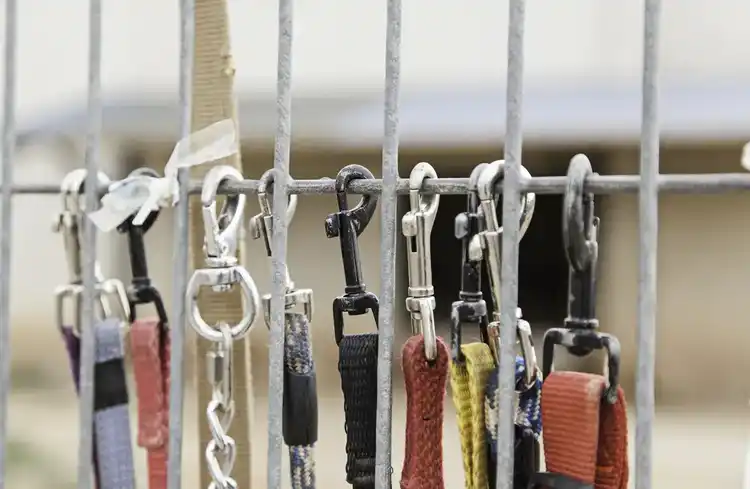
Types of Dog Leads
Once you know what you need from a dog leash, it’s time to look at your options, and there’s more than you might think!
Below, we explore the different kinds of dog leads and what dogs they’re suitable for.
Clip Dog Leads
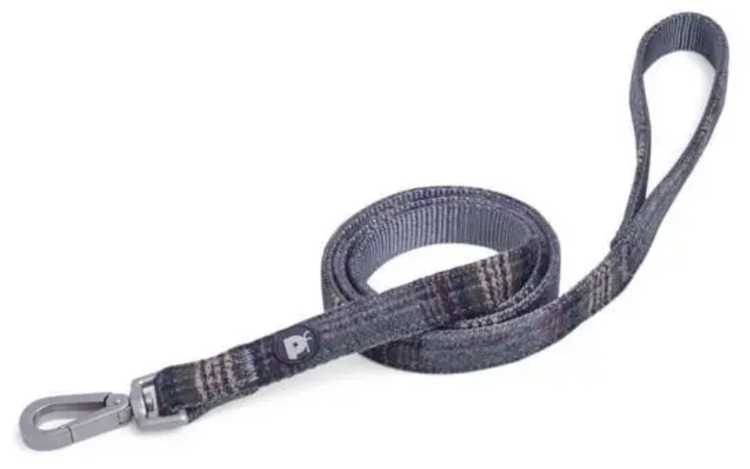
Clip leads for dogs are the most common and widely available (not to mention the cheapest) dog leads available. They’re typically a long lead made of either fabric, real (or fake) leather, or even chain with a snap hook o one end to attach to your dog’s collar or harness and a handle for you to hold on the other.
These leads are available in a variety of lengths (depending on the brand) to suit most dog breeds, and work great for training leads as well as for walking
Clip leads are available as:
- Flat Fabric dog lead - suitable for most dogs up to medium-sized breeds
- Rope dog lead - slightly stronger and more durable that a fabric lead.
- Fake/real leather dog lead– slightly more durable, and definitely more stylish
- Chain dog lead– suitable for large or strong dog breeds that may pull
Is a clip lead right for my dog?
Standard clip leads can be used with any well-behaved and leash-trained dog, so long as you have the right length. The other things to consider are the width of the lead and the material. Chain clip leads work better for stronger dogs, whereas smaller dogs may need a long, thinner lead to reach their collar or harness comfortably.
Slip Leads for Dogs
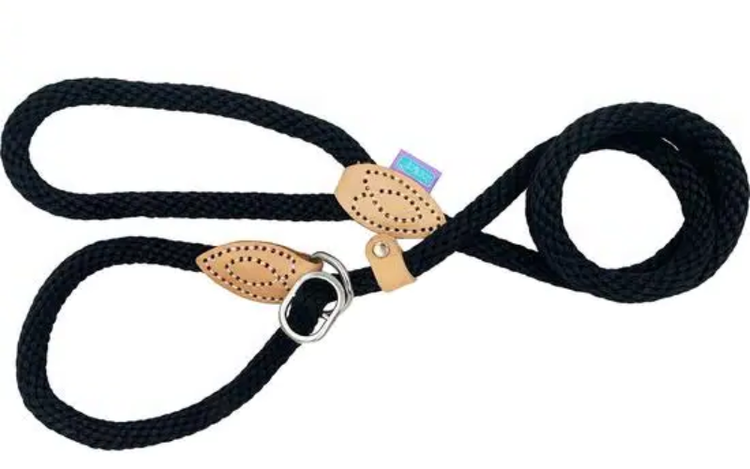
Dog slip leads, sometimes called choke leads, are comprised of a single rope with a metal loop on one end. The rope is then fed through the loop, creating a slip knot-style collar and lead that slips over your dog’s head.
The term “Choke Lead” was coined because, if your dog pulls, the loop around their neck tightens, which can cause choking. However, many modern dog slip leads have a safeguard in place to stop the loop from tightening enough to actually choke your dog.
Slip leads are particularly popular with working dogs because they can slip on and off easily, allowing for both control and release in seconds. Think of a working sheepdog who may need to be restrained for one second, and off running the next. However, due to how they tighten, they are not suitable for dogs with little lead experience, or who pull.
Is a slip lead right for my dog?
Slip leads can be controversial in the dog world, and are best suited for well-trained dogs that don't pull, dogs learning how to heel, dogs that are easily distracted on walks, and dogs that need to be on or off-lead at a moments notice, like working or gun dogs.
Retractable Dog Leads
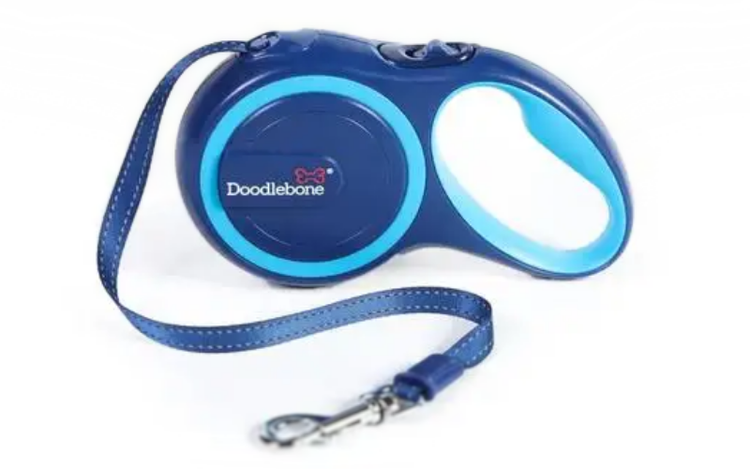
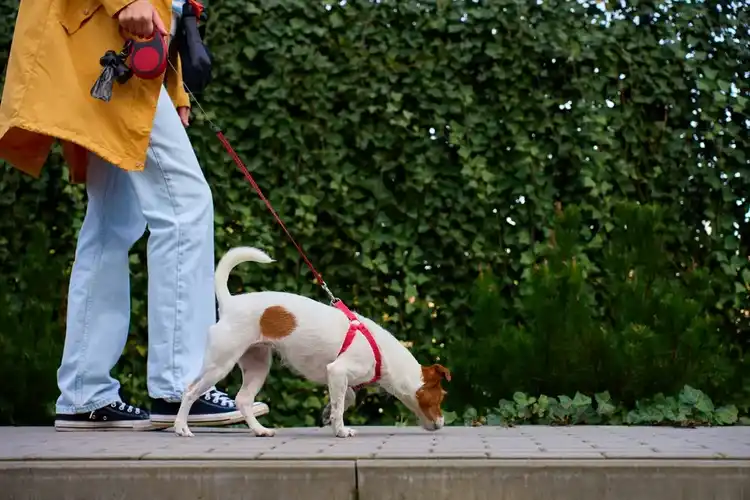
Another popular type of lead is the retractable dog lead, which comprises of a thin, tape-like lead that is spooled up inside the plastic casing and handle with a snap hook on the end. The lead can then be attached to your dog’s harness or collar and the length of the lead determined by how long you need it.
Retractable dog leads have a button on the handle (typically right where you thumb sits) that works like an emergency break. If you hold it down, the lead stops short and your dog can’t go any further without you.
Alternatively, you can also let the lead extend fully so your dog can safely explore and sniff around without being off-lead. They work well for controlling dogs when the leads are shorter, but the longer the lead extends, the less control you’ll have over your dog.
Extendable leads tend not to be the most durable, with the shortening and extending dependent on the thin, flat lead being rolled perfectly, making it unsuitable for large or strong dogs who could easily snap the lead or pull it out of your hand.
Is a retractable dog lead right for my dog?
Due to how retractable leads are designed, they are best suited to small dogs, obedient dogs, and those that don't pull.
Retractable leads are not suitable for large, strong, or highly-energetic dogs.
Dog Training Leads
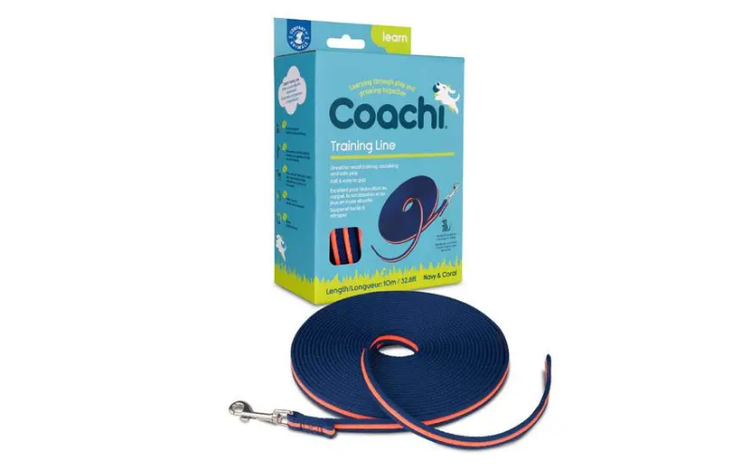
Training leads for dogs encompass various kinds of dog leads, but their purpose remains the same: to teach your dog how to walk, behave, or for easier control over excitable dogs.
Some examples of dog training leads include:
- Dog Training Lines – 5-10m dog leads designed to help with recall training.
- Adjustable dog training Leads – Double ended snap hook leads that attach to the back and from D rings of a dog’s harness for help with heel and no-pull training.
- Dog head collars – A combination of collar and harness that fits over your dog’s muzzle to help train control and direction while allowing your dog to pant, drink, and play ball as usual.
Finding the best training lead for your dog will depend on your training goals and what support your dog needs. For example, a dog training line is great if your dog recall needs some work since it offers extra freedom for your dog to explore without the risk of them running off.
Is a training lead right for my dog?
Training dog leads are suitable for any dog that needs some additional support while training. Which lead is best suited to your dog will depend on their training needs, but some examples of dog who can benefit from training leads include:
- Puppies who are still learning to walk on a lead
- Distractable dogs who require more control
- Dogs in training
- Dogs with weak recall
Bungee Dog Leads
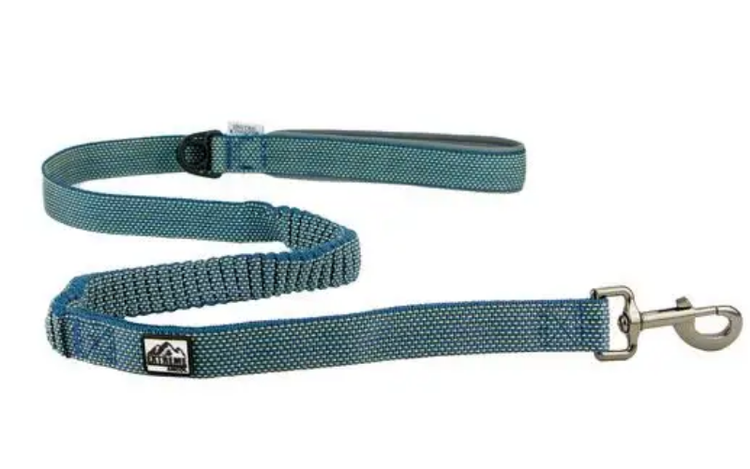
Walking in a strong heel doesn’t come naturally to all dogs, but when you favour large, strong, or energetic breeds, a bungee dog lead can work wonders.
Bungee dog leads are designed with pulling and shock absorption in mind, helping owners control dogs prone to sudden movements like lunging, chasing, or pulling. When your dog pulls, the lead stretches to absorb the jolt, making them easier to control and also protecting your arm from sharp tugs from strong dogs.
The elasticity in dog bungee leads is great for any breed of dog that needs a little help while out and about but are especially good for strong or unpredictable dogs to help protect yourself and them from sudden triggers.
These dog leads are built to last, so you and your dog can enjoy your adventures without risk of accident or injury.
Is a bungee lead right for my dog?
There are no size restrictions on bungee leads, making them great for any owner who wants to minimise pulling and ease the strain on their dog’s neck. Bungee leads are great for large or particularly strong dogs, dogs that pull suddenly without warning, or dogs that need help learning no to pull.
Hands-Free Dog Leads
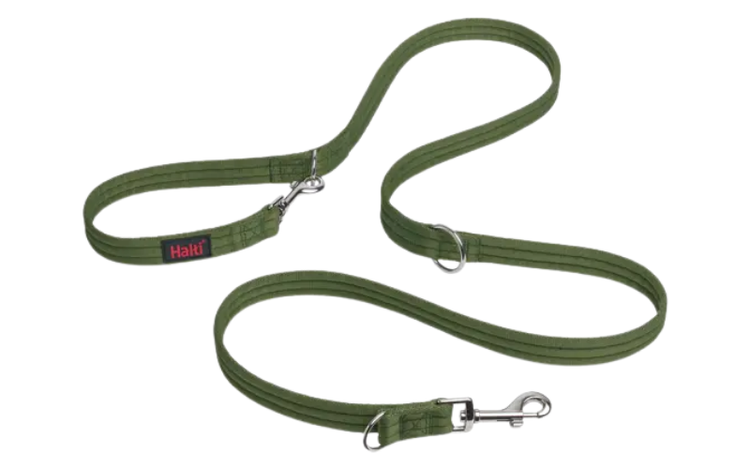
Dogs make for some of the best companions, so it stands to reason that you may want to have your dog by your side while exercising. This is where adjustable leads or hands-free dog leads can be a great help.
Designed to work without a handle, hand-free dog leads instead wrapping around the owner’s waist to allow for a handsfree jog or run, while keeping your dog tethered to you. Because of this design, hand-free leads are best suited to well-trained dogs with a good heel command to run or jog alongside you, not try and pull you along.
A sharp pull from a dog on a hands-free lad could lead to you being pulled over if your dog is strong, so bear this in mind before choosing a hands-free dog lead.
Is a hands-free dog lead right for my dog?
Hands-free dog leads can work for any dog breed or size, but are best suited to well-behaved and fully-leash trained dogs that don't pull or get distracted while on walks.
Dog Lead Splitters
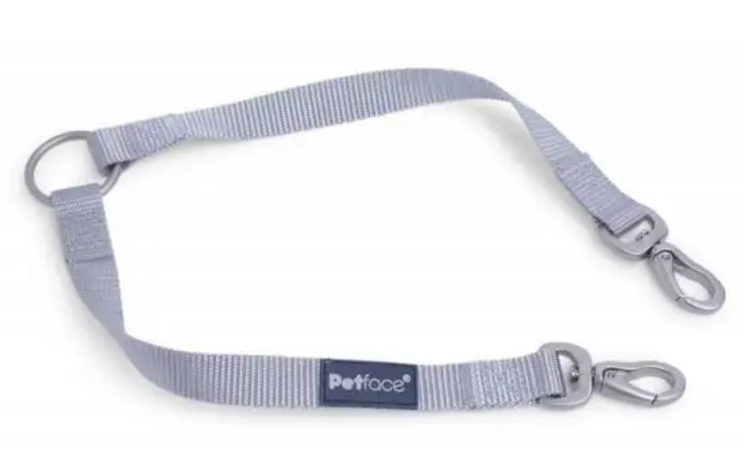
Walking one dog can be a challenge, but trying to walk two at once can be a nightmare. There are various tools and attachments to make walking your dog easier, including lead splitters. A lead splitter is an attachment for dog leads that have a strong ring to clip a hook clip to, with two or more small leads with clips branching out.
This allows you to walk multiple dogs on the same lead, just clip them each to their extension of the lead splitter, and you’re good to go!
Since a lead splitter connects to just one lead, it does mean more tension on the lead, and potential strain on the owner’s arm depending on how many or what sized dogs are being walked. Because of this, it’s not recommended to use a lead splitter for too large or strong dogs
Is a lead splitter right for my dogs?
A lead splitter can be great for you if you have two dogs of the same size that both walk well on the lead. They're not suitable for use on different sized dogs or when one dog is more energetic or pulls more than another.
How to Train Your Dog to Walk on a Lead?
Regardless of what collar, harness, or lead you buy for your dog’s walks, they’re only meant as supportive tools and make no replacement for training.
Training your dog to walk on a lead is essential and is best done when your dog is young as they’re more open to corrections and learning. However, training can occur at any age so long as you’re committed, consistent, and have plenty of dog training treats to hand.
Below, we outline the key steps for training a dog to walk on a lead properly:
Step One: Starting Position
While still indoors or in your garden, put your dog’s collar (or harness) on the lead. Hold your dog’s lead with your dominant hand and have some treats ready in the spare.
Use the treats to lure your dog into position (beside your leg with the lead crossing over your body) and give them a treat when they’re situated.
If your dog moves away from this position, lure them back and reward them with a treat. If they stay beside you, reward them for their good behaviour.
Step Twos: First Steps
Before you start moving with your dog, you need to choose a cue word to let them know when it’s time to move. This could be as simple as “come” or “walk on”, just make sure it’s not too similar to any other training cues, as this can be confusing for dogs.
Once you have your cue word, let your dog sniff the treats in your hand to get their focus.
Pull your hand to your shoulder, use your cue word, and take a step forward. If your dog follows, reward them with a treat. If not, go back to your starting position and try again.
Step Three: One Step at a Time
Repeat the first two steps, reward your dog each time they behave well, and try adding in an extra step with each try.
If your dog gets distracted or starts to wander, use the treats to lure them back to the starting position, and try again.
If your dog appears to be getting bored or distracted, let them have a break before trying again.
Step Four: Keep it Up!
Continue steps one, two, and three, rewarding your dog when they do well, and adding in an extra step or two each time. Your dog will soon learn that walking close to you is how they get rewarded.
Consistency is crucial for this kind of training, so make sure you are following these steps each time you put your dog lead on until starting beside you is common practice.
Once your dog has these basics down or is walking well beside you at home, you can continue this training in higher distraction environments, such as the street, the park, the beach, or wherever your dog will be walking.
If you start trying to practice out of the house and your dog is too distracted to focus, that’s fine. They might just need you to take them a step back in their training to get it right.
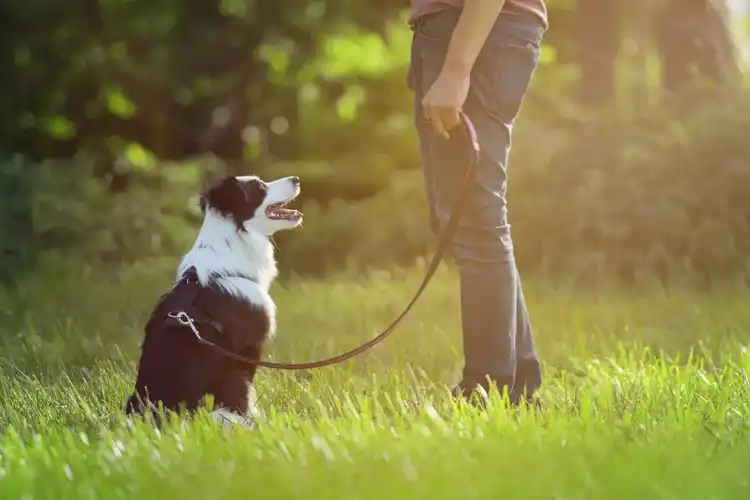
The best way to stop dogs pulling on the lead is with proper lead training. This is most easily taught to puppies before they go on their first walk but can be used for dogs of any age to aid their walking.
Having a strong “heel” command is great for aiding with leash-walking and helps your dog understand what you expect of them on the lead.
If your dog is pulling on the lead, you can also try using training aids like training leads or no-pull harnesses to start off and then work your way up to having a normal lead or harness.
While it’s not illegal to have your dog off-lead, there are circumstances where the law requires them to be on one. These tend to be public spaces like certain parks and trails, near children’s play areas or sport pitches.
Dogs should also be kept on a short lead along road, pavements, and public footpaths shared with horses, according to rule 56 of the Highway Code.
Certain public places are also allowed to refuse entry to people with dogs, on lead or otherwise. Regardless of your dog’s temperament or obedience, you must adhere to these rules, which are often signposted. If you’re unsure about what rules there are about dogs in your local area, check out your local council website for more advice.
When used properly, slip leads can be good for some dogs, particularly those who are well-trained and don’t pull. They’re popular with owners of gun dogs and working dogs since they can be slipped easily on or off at a moment’s notice. Slip leads can also be invaluable when trying to catch an escaped or stray dog.
However, slip leads are not suited to all dogs, and should not be used with puppies, strong pullers, dogs with breathing difficulties, or older dogs who may have other health issues.
Walking your dog is a requirement for having one. Not only do walks offer exercise, but they’re also one of the best ways to offer them enrichment and exploration safely. While not all dogs are great on the lead to start, with the right training and a lot of patience, they’ll be trotting along perfectly in no time.
We hope this guide to dog leads helps you find the best lead for your dog. If you’re looking to kit out your dog’s walking gear, then why not check out our range of dog walking accessories, from collars and leads to harnesses and training aids.
