
{block: mb:12px}How to Treat Roundworms in Dogs & Cats
Parasites are never good for pets. If not treated, they can cause discomfort or even health complications. Here, we explain roundworms, what to do if you think your pet has them, and what the best roundworm treatment is for your pet.
What Are Roundworms?
Roundworms are one of the most common intestinal worms found in the UK, making it more likely your pet may pick them up at least once in their lifetime.
The name roundworm comes from the tubular or round shape of the parasite, which, once an infestation takes hold, lives in your pet’s intestine to feed off undigested food. Once in the intestines, roundworms can grow 13 inches long and be as thick as a pencil.
They can also live for years in your pet, with a mature female roundworm laying as many as 200,000 eggs daily. These eggs are then passed through your pet’s faeces, which can contaminate surrounding soil and water, increasing the risk of infestations in other pets and wildlife.
There are two types of roundworms your pet is at risk of picking up:
- Toxocara canis
- Toxascaris leonina

Of these two, Toxocara Canis is the most dangerous. Not only are these kinds of roundworms zoonotic (able to pass from animals to humans), but a roundworm infestation in humans can cause a number of health problems, including:
- Unintentional weight loss
- Vomiting, diarrhoea and stomach aches
- Bowel blockages
- Toxocariasis
Toxocariasis is particularly dangerous in humans as many people don’t notice any symptoms of the infection. However, in severe cases, or if the infection is not treated, toxocariasis can cause pneumonia and even loss of vision.
Roundworms in Dogs
While there are several parasites your dog could pick up in its lifetime, roundworms are one of the most common in the UK.
While adult roundworms typically live in your dog’s intestines, the larvae can move out of your pet’s gut to travel to more of your dog’s organs or tissue, including the liver, lungs, and skeletal muscles. If this occurs, your dog may develop internal cysts, which are not only dangerous to your dog's health but may also lead to further veterinary costs, as your vet works to find the root cause.
How Do Dogs Get Roundworms?
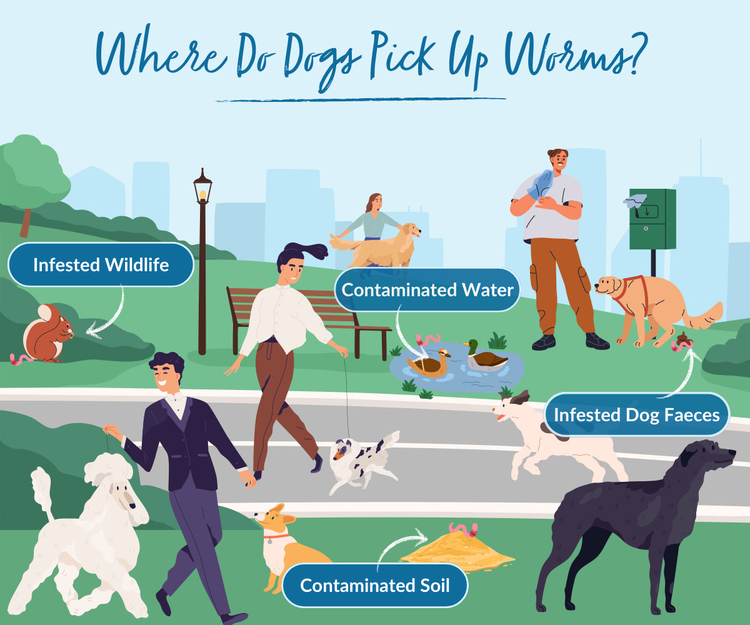
Dogs pick up roundworms by ingesting (intentionally or otherwise) roundworm eggs or larvae. As roundworms spread their eggs through the faecal matter of their host, your dog is at risk of picking up roundworms from anywhere that has been contaminated by them, such as:
- Contaminated water sources
- Contaminated soil
- Contaminated faeces
- Contaminated wildlife
Some dogs are more likely to accidentally ingest worm eggs than others, especially those who have a habit of eating things they shouldn't. This is why it's always recommended to have a worming plan in place for your dog to prevent infestations before they start.
Roundworms in Puppies
Roundworms can also be passed from an infested mother dog to her puppies in the womb and through the mother's milk.
Roundworms are particularly dangerous in puppies as they consume the vital nutrients they need to grow, causing stunted growth, diarrhoea, and even bloating. This can substantially impact a puppy’s later life, which is why vets recommend worming all puppies in a litter with a suitable puppy wormer like Drontal® Oral Suspension for Puppies once they’re two weeks old. Puppies should then be wormed with puppy worming treatments every two weeks until they finish weaning.
Two weeks after puppies are weaned, they should be wormed monthly until they’re six months old. Responsible breeders will document every worming treatment your puppy is given, which you can discuss with your vet during your new pup's first visit.
Roundworm Symptoms in Dogs
If you think your dog may be at risk of having roundworms, then there are some symptoms you can watch out for. However, you should bear in mind that many dogs show no symptoms of being infested, which is why treating your dog monthly with a suitable roundworm treatment (like these FRONTLINE® WORMER Flavoured Tablets for Dogs) is essential to ensure any infestations are dealt with promptly.
In more severe infestations, the key signs of roundworms in dogs include:
- Diarrhoea
- Vomiting
- Weight Loss
- Dull hair
- Potbellied appearance
- Visible worms in vomit or stool
If you notice any of the symptoms mentioned above of roundworms in dogs, contact your vet for a consultation as soon as possible. If your vet suspects your dog to have worms, they may ask for a sample of your dog's stool to test. Roundworm diagnosis involves mixing the sample with a liquid solution, which causes the roundworm eggs to rise to the surface.
Once your vet has a diagnosis, they can offer you appropriate treatment recommendations for your dog, which may include prescription dog wormers.
How to Treat Roundworms in Dogs
The good news is since roundworms are so common, effective treatments are available in various formulas to suit your pet. If you’re not sure which wormer would work for you, here are some ingredients to look out for:
- Fenbendazole
- Pyrantel
- Praziquantel
- Febantel
Each of the above-mentioned ingredients is effective and safe for dogs. Make sure you pick a product that targets the specific worm your dog has or a combination if you’re planning to use them for routine treatment. If you’re still unsure, speak with your veterinarian. Not only can they recommend the perfect treatment for your dog, but they can also provide prescription treatments if your dog needs them.
Many wormers, such as the Drontal® Tasty Bone Wormer Tablets, are formulated to target some of the most common worms found in the UK. When administered as part of a routine parasite prevention plan, you can offer your dog continued protection.
If you're not sure which wormer is right for your dog, check out our guide below to find the perfect fit, or consult with your vet for recommendations.
Roundworms in Cats
Dogs aren’t the only pets at risk of contracting roundworms. They’re just as common in cats, and almost all cats will become infected within their lifetime.
While roundworms may not cause major health problems in a healthy adult cat, they can cause life-threatening conditions in kittens and older cats with existing issues. This means treating your cat for roundworms is just as important for a healthy cat as for any other, not just to safeguard their health but also to stop the spread of roundworms to animals who are more vulnerable.
How Do Cats Get Roundworms?
As with dogs, cats can pick up roundworms from various places contaminated by roundworm eggs, such as water sources, faeces, and soil. All it takes is for your cat to ingest the roundworm eggs for an infestation to start.
Outdoor cats, in particular, are at risk of picking up roundworms due to their nature as hunters. Many wildlife, such as birds or insects, can be carriers of roundworm eggs but do not have the optimum systems to sustain them. Instead, the eggs remain unhatched in the carrier animal until a cat hunts them, which may then be ingested. Cats are also fastidious groomers and may ingest microscopic roundworm eggs during cleaning if they’ve been somewhere or eaten something contaminated.
Unlike dogs, outdoor cats are rarely supervised and may become infested without your knowledge. This is why routine cat worming treatments are recommended monthly for cats allowed to roam outside, especially successful hunters.

Roundworms in Kittens
As with puppies, kittens can contract roundworms from their mothers while in the womb if infested. These worms can also be passed through the mother cat’s milk, infesting the litter and potentially causing stunted growth as the worms consume the vital nutrients the growing kittens need. This is why treating kittens for worms is essential.
It’s recommended that kittens be wormed once they’re three weeks old, then every two weeks until they’re 16 weeks (about three and a half months) old, after which they can move to an adult cat worming plan. Always ensure that a new kitten has been properly treated for worms when bringing it home.
Roundworm Symptoms in Cats
Many adult cats won't show symptoms of a roundworm infestation, and those that do may be doing a good job of hiding them so as not to appear vulnerable. However, in more severe infections, there are some signs of roundworms in cats to watch out for, including:
- Diarrhoea and/or vomiting
- Unintentional weight loss
- Coughing
- Dull coat
If you notice any of the above signs of roundworms in your cat, speak with your vet as soon as possible. They will be able to discern the severity of the infestation as well as check your cat for any lasting impact it may cause.
How to Treat Roundworms in Cats
Like dogs, roundworms in cats are common, and there are plenty of treatment options to reflect that. Cat wormers are available in various formulas, including spot-on treatments like the Dronspot® Spot-On Wormer for cats. These treatments are applied topically and absorbed through the skin to tackle infestations from common UK parasites, including roundworms and tapeworms.
If you’re not sure what to look out for, aim for a cat worming treatment that includes one of the below active ingredients:
- Emodepside
- Praziquantel
- Pyrantel Pamoate
- Fenbendazole
These ingredients are clinically tested, safe for use in cats, and get to work fast. Just make sure that the treatment you're using is suitable for your pet's species and weight and that you never use a dog-specific treatment on a cat, and vice versa. There are some wormers, such as these Panacur® Worming Granules, that are safe for use in both dogs and cats, but you should always check the packaging carefully before administering any treatments.
Customers Also Ask
Yes, in rare instances, humans can contract roundworms from dogs, although this can be easily avoided with the proper hygiene and prevention practices.
In severe cases, humans can experience toxocariasis from contracting roundworms, which may cause fever, coughing, and, in extreme cases, blindness.
Roundworms are a common threat to pets nationwide, but maintaining a worming routine can prevent infestations before they take hold. How often you should worm your pet is dependent on your pet and their behaviour. Those at lower risk of contracting worms might not need treatment as often, but it's always better to be safe than sorry. If your pet shows signs of having worms even after being treated, ask your vet for advice.
Never miss another worming treatment with the Easy Repeat subscription service from Pet Drugs Online. With tailored deliveries to fit your life and a great range of worming products from top brands, you can spend less time worrying about missed treatments and more time with your furry friend! You can also browse our full range of roundworm treatments below.


