Parasites in Horses: An Overview
All animals are at risk of picking up parasites in their life time, even humans. Horses are particularly prone as they spend a lot of time either in a stable, which can attract flies, or in the pasture where they can pick up immature parasites while grazing.
In this article, we explore the most common equine parasites, how to spot them, and how to protect your horse.
External Parasites in Horses
An external parasite is a parasite that exists outside of your horse. These are the bugs and critters that fly onto your horse, or clamber up their legs to get situated, much like fleas and ticks in domestic pets.
Below, we detail the most common external parasites, how to treat them, and what methods you can employ to protect your horse.
Flies in Horses
Flies are an annoyance to anyone at the best of times, but flies can be a particular problem for horses. The most common flies impacting horses include:
- Stable Flies
- House Flies
- Blow Fly / Blue Bottle Flies
- Horse Flies
- Black Flies
Each of these flies are drawn to either horse dung or the horses themselves depending on the species. Below, we look at each of these types of flies, their symptoms, and how to get rid of them.
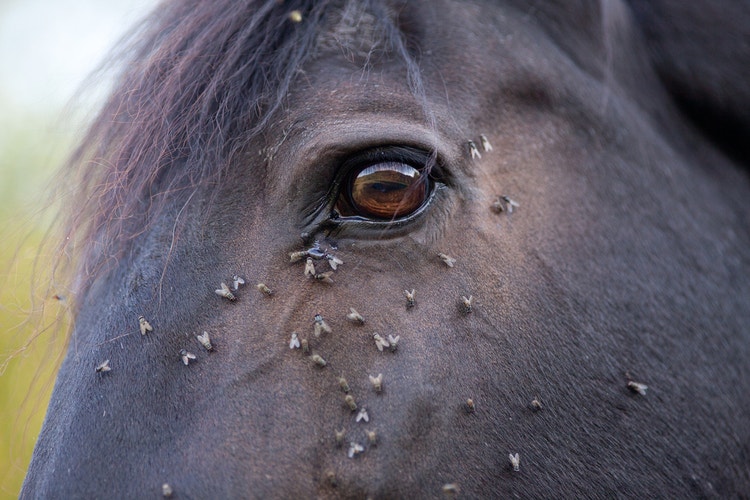
These flies are drawn to horse stables because of the dung and more can be attracted by soiled bedding or your horses in general.
While they don't bite your horse, these flies tend to gather on your horse where they have mucus membranes, such as the eyes, nose, and sheath area where they feed off secretions. Some are even attracted to open wounds which impact the healing process and can lead to infections.
Signs of these flies in horses include:
- Weepy eyes
- Head shaking
- General irritation
To get rid of these flies and ensure the health of your horse:
- Ensuring stable & pasture hygiene (poo pick in fields, removing all soiled bedding, keeping the muck pile away from field and stable areas)
- Wash horses after work (cleaning eyes, nose, and docking areas especially)
- Protect open wounds to prevent flystrike in horses (either using a dressingor a barrier cream)
- Use a fly repellent spray, a horse fly collar, fly leg bands, or rugs
- Use fly barriers
- Use fly papers in stables and barns
Flies are mostly drawn to still air, but some may gather water sources like streams, troughs or puddles.
There are multiple flies that bite horses, including horse flies, stable flies, and black flies. They'll bite humans too, if given the chance.
Black Flies
The smallest of these pests is the black fly, measuring approximately 1-6mm long. Females lay their eggs in fast running water, on stones or leaves, and the larvae can be found in swift, well-aerated water. Female black flies can inflict a painful bite to horses and tend to feed around the head, ears, eyes and abdomen.
Signs of black fly bites include:
- Redness
- Itching
- Hives
- Changes in behaviour
Due to them breeding in flowing water, controlling populations of black flies isn't the most practical solution. However, using fly masks when your horse is in pasture (especially near flowing water) can prevent them biting, and horse fly repellents should also be effective against black flies.
Horse Flies
Horse flies are very common in the summer months, particularly in June and July near wooded areas and wet soil where the females lay their eggs. They are large, dark insects with wings that can measure up to an inch in length.
Horse flies are a type of biting fly, with the females feeding on a horse’s (or a human’s) blood, commonly around the underside of your horse, the legs, the neck, and the withers (between the shoulder blades). Horse fly bites appear as tender lumps or bumps with a central ulcer. Horse flies are attracted to dark, moving objects, sweat, and carbon dioxide, making them a real problem for large, dark coloured horses who tend to attract more horseflies than lighter horses.
Stable Flies
Stable flies on the other hand, are drawn to the soiled bedding and dung found in most livery yards as it provides the perfect breeding ground. They lay eggs in moist and decaying matter, and despite the name are more often found outside than inside of stables. They’re most active in late summer and early autumn, and stable flies feed off blood from livestock (such as horses). Stable flies tend to gather on your horse's underside (legs and bellies) where they bite, causing painful scabs and irritation.
To protect your horse against biting flies:
- Avoid the flies most active periods
- Use a fly repellent spray on your horse
- Use fly barriers, such as fly rugs, nets, and fly masks
- Ensure a strict hygiene routine in and around stables
- Use fans in stables to blow flies away from horses
- Use oil-based fly repellents for horses containing citronella.
The biggest risk to horses from flies is flystrike which occurs when a fly lays their eggs on a horse. The eggs then hatch into maggots that feed off the flesh of the host animal.
Flystrike is incredibly painful for the animal and potentially fatal as maggots eating the flesh can cause secondary infections or even toxic shock syndrome. Flystrike can occur quickly and without a lot of warning, so make sure to check any horses exhibiting signs like:
- Twitching tails
- Rubbing against posts or fencing
- Hair loss
- Swollen or painful skin
- Visible fly eggs or maggots
If your horse is showing symptoms of flystrike, call your equine vet as soon as possible.
Midges
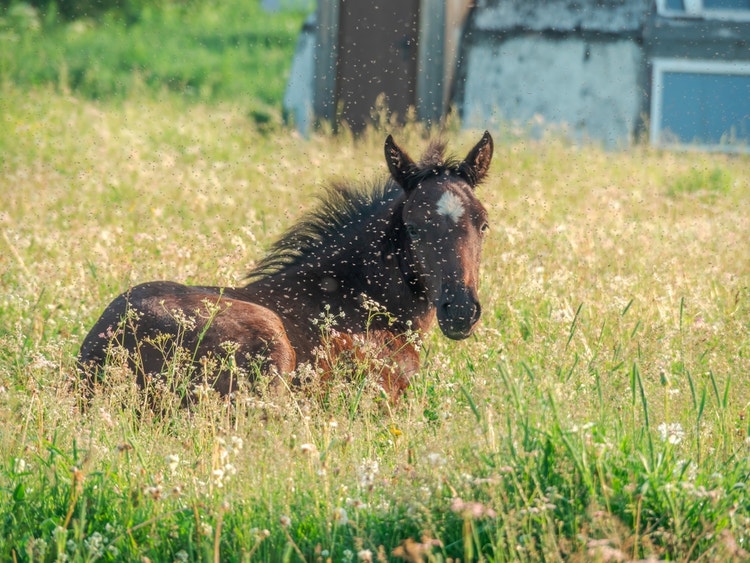
Midges are a small biting flies no bigger than a pinhead that tend to form swarms and bite exposed skin on humans and animals. While it’s only the females that bite, they do this in order to obtain proteins needed for developing eggs.
Most midges breed around water sources, with female midges laying their eggs in damp soil, moist leaf material, and muddy or vegetated substrates. They are most active around dawn and dusk but have been known to bite throughout the day.
Some horses can develop an allergy to the bite of a midge (or, more specifically, to midge saliva) which is known as sweet itch. Sweet itch in horses can cause:
- Scratching or rubbing the area
- Thickening skin
- Hair loss
- Inflamed sores
- Changes in behaviour
- Vigorous tail swishing or head shaking
Unfortunately, there is no cure to sweet itch in horses, but there are steps you can take to protect your horse, such as:
- Keeping horses sheltered during high-activity times (dusk and dawn)
- Using fly masks, rugs, or fly nets on stable windows
- Regularly using fly repellent sprays or washes effective against midges (like this SWITCH Sweet Itch Control Aid Pour-On Solution)
- Soothe your horses' symptoms with sweet itch creams or soothing gels
If your horse is suffering from sweet itch, you can speak to your equine vet about medical treatments for sweet itch in horses.
Mites
Mites are tiny little bugs that live on most living things and cannot be seen with the naked eye but can cause extreme discomfort to horses. Some horses will not show any symptoms of a mite infestation, while others can have a big reaction to a small infestation, so managing mites is essential.
There are different types of mites that can infest your horse, and each type can impact a different part of your horse. Below, we detail the most common mites in horses, where they can be found, and how they feed.
Itchy leg mites are common in the UK and affect horses by biting their skin and feeding off the debris and sores left behind. As the name suggests, itchy leg mites are most often found on your horses heel and lower legs.
Symptoms of itchy leg mites in horses include:
- Itching
- Stamping
- Hair loss
- Crusting on skin
- Thickening skin from sores
Follicle mites, as the name suggests, penetrate your horse's hair follicles where they feed. This can cause secondary bacterial infections which result in inflammation and irritation in your horse. Follicle mites are most often found around your horse's eyes and forehead, but can spread throughout the body.
Signs of follicle mites in horses include:
- Patchy hair loss
- Skin lumps
Mange mites (sarcoptes scabiei) are the mites that cause mange in horses. Their saliva contains digestive enzymes that break down your horse's skin tissue and allow the mites to tunnel through the skin. This is what causes the most irritation to your horse, and some horses may even develop an allergic response to a mange mite's bite.
Sarcoptic mange mites can most often can be found near your horse's head, but they can develop anywhere on your horse's body.
Symptoms of mange mites in horses include:
- Rubbing and chewing skin
- Crusty Sores
- Hair loss
- Small bumps and blisters
- Skin thickening
Harvest mites, unlike the others mentioned, live in your horse's environment, particularly chalky or sandy soil. Eggs from harvest mites are laid in the soil where, upon hatching, they feed off the tissue of small mammals.
Horses are most at risk of harvest mites in late summer and early autumn while in pasture as the mites attach themselves to the horses heel.
Signs of harvest mites in horses include:
- Dried crust over red skin
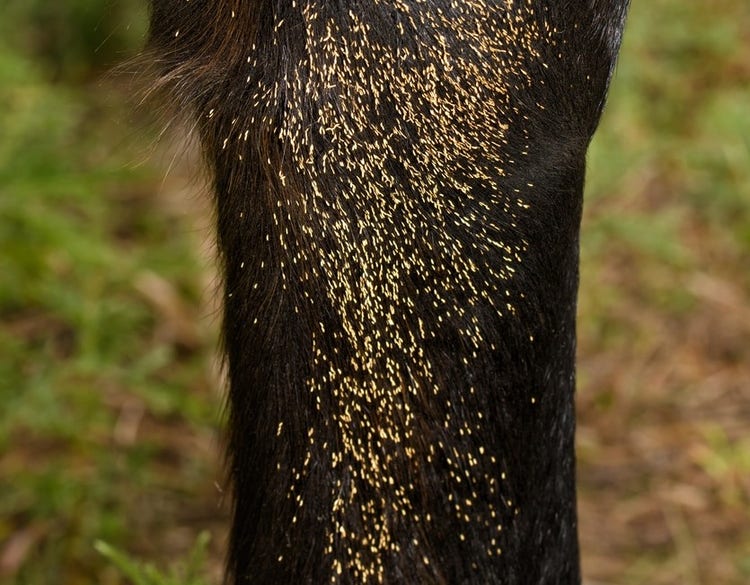
- Little orange dots on your horse (these are the actual harvest mites)
Getting rid of mites in horses can be tricky since different types have different life cycles, and not all mite treatments will kill immature mites as well as adults. Speak with your equine vet if you notice signs of mite infestations on your horse and they can help develop an appropriate treatment plan.
To prevent mites in horses, ensure a clean, stable and pasture environment, routine grooming of horses, and disinfecting equipment to prevent cross-contamination. If your horse is recovering from a mite infestation, skin and coat supplements for horses can help support their skin while it heals.
Lice
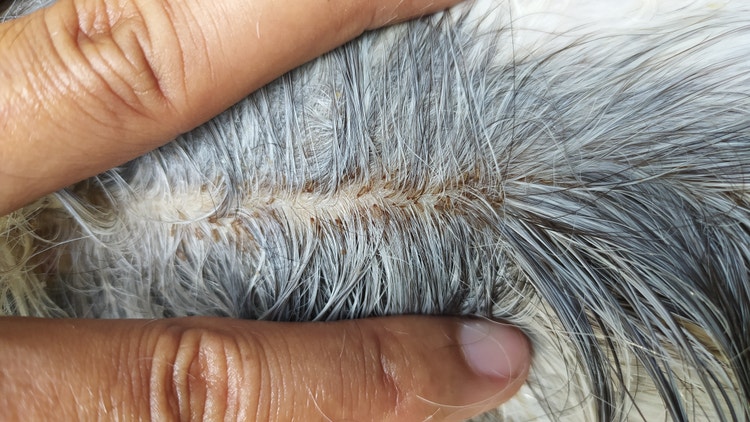
Lice are another external parasite horses can pick up. These small, wingless insects have segmented bodies and live in your horse’s hair. Unlike mites, lice can be seen with the naked eye and spread through contact with an infested horse. Horses can also pick up lice through brushes, rugs, or scratching on the same post.
There are two main kinds of lice that infest horses:
- Mallophaga (biting lice)
- Anoplura (sucking lice)
Biting lice feed on your horses hair and skin and are often found around the shoulders, neck, flanks, and the base of your horse’s tail.
Sucking lice, feed by embedding their mouthparts into the roots of your horses hair where they suck on their blood.
Much like in humans, lice cause irritation and itching in horses, as well:
- Dull coat
- Sore patches
- Hairloss
You can treat your horse for lice by using lousing powders for horses like this Barrier Livestock Louse Powder, or contact your equine vet for recommendations.
Internal Parasites in Horses
As well as external parasites, horses are susceptible to infestations from internal parasites like worms.
You can learn more about treating worms in horses in our complete guide to horse worming or read more below to see what kinds of worms a threat to your horse, and how to treat them.
Bots in Horses
While technically a type of fly, bot flies are tied to horses because of their lifecycle, or which three stages are spent inside the horse.
In the UK, there are three types of bot flies that impact horses:
- The common bot (which lays pale, yellow eggs on your horse's body which are then ingested)
- The throat bot (which lays yellow eggs around the throat and under the jaw of horses)
- The nose bot (which lays eggs on the hairs around your horse's lips)
Of these three, the common bot is the most likely culprit for infestations.
The bot fly's full life cycle lasts approximately a year. Female bot flies lay their eggs externally on your horse's coat which are then enticed to hatch by the warmth and moisture of your horse's mouth. Once hatched, the larvae make their way into your horse's mouth where they burrow into the gums for 3-4 weeks.
After this time, the larvae make their way to your horse's gastrointestinal tract where, depending on the type of bot, they attach to the top of the stomach (common bot), the small intestines (throat bot), or the mucous membranes in the stomach or rectum (nose bot). Here, the bot larvae feed off nutrients consumed by the horse for 10-12 months before detaching to be passed into the environment through faeces to enter the pupal stage. Bot fly pupae develop in the soil for 3-5 weeks before emerging as a bot fly to start the cycle again.
It is very rare for bots to cause discomfort or disease in horses, and some horses can have a large number of bots without showing so clinical signs. Bots cannot be tested for like worms or other external parasites, but in rare cases you may notice:
- Bot eggs on your horse's coat (particularly around the head and face)
- Inflammation of the mouth and gums caused by migrating larvae
- A decline in condition from horses being unable to digest food properly
- Inflammation caused by damage to the stomach lining
- Abscesses caused by burrowing (which can in turn cause colic)
Preventing bot flies in horses tends to require a three-pronged approach:
- Using fly repellent sprays to try and prevent the bots landing on your horse (not entirely effective)
- Scraping eggs off your horse's coat using a bot knife or blunt metal edge to minimise how many hatch.
- Using a worming treatment on your horse containing ivermectin or moxidectin (best done after the first frost when treating your horse for redworms to prevent infection)
If you notice bot eggs on your horse, then it's safe to assume more horses in the herd have also been impacted, and so should be treated as well.
Roundworms in Horses
Roundworms are a problem for most pets, but when it comes to horses, they are most problematic for foals and horses under four-years-old, as well as horses pastured with them.
Roundworms have a rapid reproductive cycle with a single female capable of laying 200,000 eggs a day. This means a small roundworm burden can fast become an infestation, especially in foals and young horses who haven’t finished growing, leaving less space for the worms to occupy.
Signs of roundowrms in horses include:
- Weight loss
- Lethargy
- Coughing
- Digetsive problems
- Pot belly
- Rough coat
Roundworms can be detected with feacal egg counts which detect how many worms are laying eggs and contributing to the roundworm burden in your horse.
Healthy, adult horses tend to have a good resistance to roundworms, but should have FECs performed regardless to check the individual horse’s burden.
Roundworms can be treated with a horse wormer containing fenbendazole like the Panacur Equine Guard Oral Suspension Wormer, as resistance has been noted against ivermectin, according to Westgate Labs.
Pinworms in Horses
Pinworm cases are on the rise, according to Westgate Labs, likely caused by a preference for ivermectin or moxidectin wormers which are less effective against these parasites.
While unlikely to cause serious illness, pinworms can be a real nuisance to horses as the adult worms live in the rectum, with the females emerging to lay their eggs around the horse’s anus rather than inside the digestive tract. The emergence of the female worms is what causes the irritation which can cause:
- Rubbing their rear end, hind legs or tail area
- Secondary skin infections
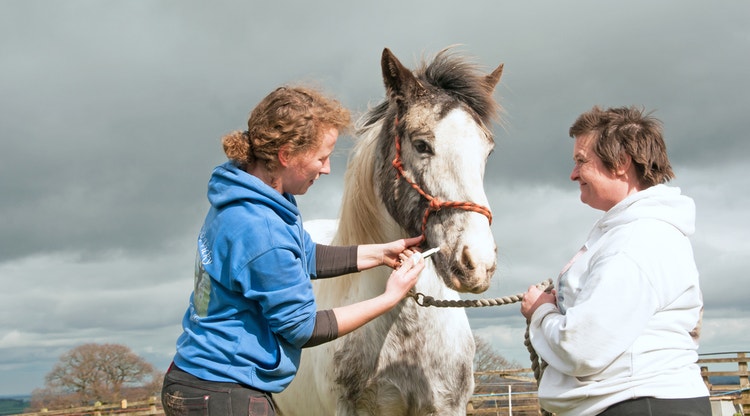
Pinworms do not show up in feacal egg counts because the eggs are laid externally, but you can buy pinworm tests for horses, or do your own tape test to determine if your horse has pinworms.
To do this:
- Press a 4 inch length of clear sticky tape to the skin around your horse’s nus (avoid sticking the tape to any hair)
- Remove the tape and fold it in half sticky side to sticky side.
- Pop the tape in a sample bag and send it to your Equine vet or preferred testing facility
- Wait for the results.
Treating pinworms should be combined with a strong field and hygiene routine including:
- Cleaning around the infected horse’s anus 1-2 times a day to remove new eggs
- Cleaning and disinfecting areas your horse has rubbed against, such as fence posts, fencing, stables doors and any field structures.
- Tape test younger and older horse’s in the herd as they are more susceptible to infestation and may require additional support for their immune system.
- Retest your horse two weeks after their last pinworm test
Treatments for pinworms in horses should contain the active ingredients pyrantel like this Strongid-P Oral Paste Wormer for Horses or fenbendazole, such as in the Panacur Equine Oral Paste Wormer which are more effective against pinworms than those containing ivermectin or moxidectin.
Tapeworms in Horses
Another parasites that can infest horses are tapeworms, much like in cats and dogs.
Tapeworms in horses attach themselves to the gut wall to feed off the nutrients in the horse’s diet, which can cause:
- Diarrhoea
- Damage to the intestinal wall
- Colic
- Weight loss
Tapeworms are most problematic in foals who have less developed immune systems and so can be more prone to bacterial and secondary infections caused by a tapeworm infestation.
Tapeworms can be tested for, but not in feacal egg counts. Instead, saliva tests are used to measure the level of antibodies the horse has produced against any tapeworms. Saliva tests should be done very 6 months and allow you to identify the threat level to your horse so you can treat them accordingly.
To treat tapeworms in horses, you’ll need a horse wormer with praziquantel as the active ingredient. You can get praziquantel only horse wormers through your vet, or you can use a dual horse wormer like this Equest Pramox Oral Gel Wormer for Horses, which contains praziquantel and moxidectin so can be used to treat tapeworms and small and large strongyles (redworms) in horses together. To reduce resistance against wormers, however, it's not always recommended to treat a horse with active ingredients they don't specifically need.
Tapeworms in horses can also be treated with a double-dose of an equine wormer with pyrantel as the active ingredient, such as in the Pyratape P Oral Paste Wormer for Horses.
Small & Large Strongyles
Small and Large strongyles (also known as small redworms and large redworms in horses) are one of the most common internal parasites a horse can get.
Small strongyles have a short life cycle, taking as little as 6 weeks, meaning a small redworm burden can quickly become an infestation if left unchecked, causing:
- Weightloss
- Anemia
- Stomach distension
- Colic ad Diarrhoea
Large redworms can also be troublesome as part of their lifecycle is migratory, meaning the immature worms travel through the horse's body via the bloodstream. Depending on the type of large redworm, this migration may be through the arteries, the liver, or the liver and pancreas.
Both small and large strongyles can be treated with an appropriate horse wormer containing one of the following:
- Fenbendazole
- Pyrantel
- Ivermectin
- Moxidectin
Of these treatments, only moxidectin (which is the active ingredient in Equest Oral Gel Wormer for Horses) is effective against encysted redworms which occurs when the immature stages of small strongyles enter the horse’s digestive system and burrow into the mucus membrane of the colon (large intestine) and caecum (start of the large intestine).
Parasite Control for Horses
Controlling horse parasites can be tricky since not all of them are susceptible to the same kinds of treatment. Worms in particular can be a pain depending on the type of infestation.
Broadly speaking, the best way to prevent parasites in horses is to:
- Maintain solid stable and pasture hygiene
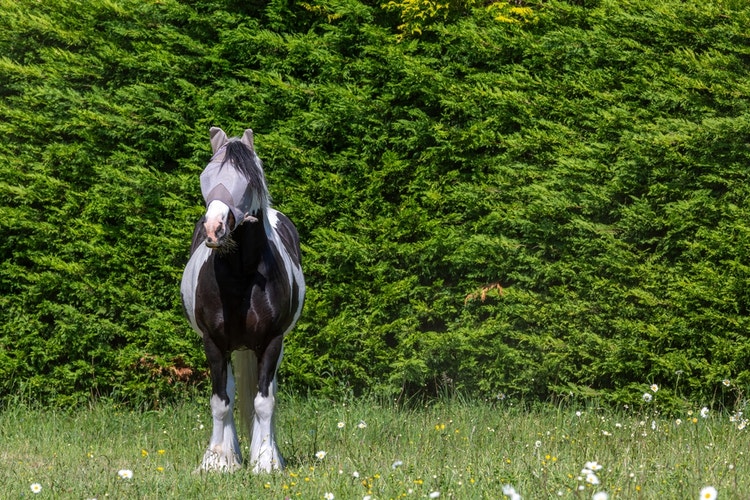
- Use fly barriers such as fly masks or fly rugs
- Use fly repellent sprays like Deosect Topical Fly & Lice Control Spray for Horses, or fly repellent creams like the Battles Summer Fly Repellent Cream
- Perform routine feacal egg counts and saliva tests for tapeworms
- Treat your horse for parasites when necessary, instead of blanket treatments
Parasites are a nuisance to any pet, and if left untreated, can have a dire impact on your horse’s health. By being proactive with your horse’s feacal egg counts and using fly repellents or barriers, you can help protect your horse from pesky parasites and ensure they’re happy and healthy inside the stable or out.
If you’re looking for some of the best horse parasite preventatives, then check out our full range of equine parasite treatments including products from top brands like Panacur, NAF OFF and Audevard.

- BHS, Sweet Itch in Horses.
- Equus England, Four Flies That Bite Your Horse.
- Feedmark, The Signs of Equine Lice and Mites. Last updated 6 October 2023.
- Horse and Hound, Lice in Horses: How best to deal with this itchy pest. Last updated 30 March 2020.
- Horse and Hound, Horse Flies - and how to deal with pesky horse fly bites. Last updated 24 June 2025.
- Little Rock Equine Vets, External Parasites in Horses. Last updated 8 May 2022.
- MSD Animal Health Hub, Ectoparasites in Horses.
- MSD Vet Manual, Biting Midges of Animals. Last updated May 2025.
- RSPCA, Flystrike in Farm Animals.
- Vet Times, Equine Internal and External Parasites: identification, treatment and improving compliance. Last updated July 2016.
- Westgate Labs, Flies.
- Westgate Labs, Pinworm.
- Westgate Labs, Worming Treatments by Parasite.
- World Horse Welfare, Mites: How to treat them in horses.
