Dog Collars vs Harnesses: Which is Better?
Regardless of your dog’s breed, age, activity level, or temperament, going for walkies every day is a must, so finding the best dog walking accessories for your dog can be tricky, especially when you don’t have the whole story.
We’ve put together this dog harness vs dog collar comparison guide so you can get a better understanding of what is available, what works, and what doesn’t, so you can make the most informed choice for your dog.
Key Takeaways:
- Dog collars and dog harnesses can be used separately or together: which is best will depend on your dog's temperament, size, breed and activity level.
- Puppies should be taught to tolerate a collar (for legal reasons) and a harness (better suited for leash training) so when they're older, you can choose which suits best!
- Remember the "Two-Finger Rule" - You should be able to fit two fingers between your dog's collar or harness and their skin for the most secure and comfortable fit.
Benefits of Dog Collar vs Harness
Dog collars have been around almost as long as dogs have been domesticated. They're a simple bit of kit, usually made from a strap of core material (such as leather, woven materials, nylon, etc) and fastening.
When choosing a dog collar, you should consider:
- Your dog’s size (smaller dogs will need a longer lead to accommodate the distance)
- Your dog’s behaviour (dogs that pull can hurt themselves by pulling on a collar)
- The collar's material (dogs with skin sensitivities can have reactions to certain materials, while other materials may rub or cause irritation)
- Your dog’s health (dogs with breathing difficulties can be hindered further by having something around their neck)
- How the collar fastens (some buckles are designed to break to prevent choking, meaning strong dogs can break free easily)
Some dog collars have a metal buckle fastening, like this Ancol® Timberwolf Leather Dog Collar, which tend to be more durable, but are also harder to release in an emergency. Other collars use quick-release buckle fastenings, like this Doodlebone Padded Dog Collar, which are easy to put on and remove, but offer less security if your dog tries to slip free or pulls really hard.
All dog collars are fitted with a D-ring for a dog leash to attach to and are easy to fit with ID Tags or GPS trackers, AirTags, health trackers or even little charms to add some spice to your dog’s style.
There are arguments both for and against dog collars, so we’ve set out the pros and cons of using a collar vs harness below:

Advantages of Dog Collars
- Simple and easy to put on
- Perfect for well-behaved and heel-trained dogs
- Can be worn for long periods
- Well tolerated by most dogs
- Can be used with ID Tags, or GPS trackers (e.g. Airtags)
- Much cheaper than dog harnesses
Benefits of Dog Collar vs Harness
- Puts pressure on your dog’s throat
- Has the potential to cause tracheal collapse in some dogs
- Can hinder breathing for dogs with respiratory issues
- Easy to slip off, making them not ideal for leash training
- Can get caught on branches or other things while free roaming, increasing the risk of choking
When to Use A Collar Vs Harness
Teaching your dog to wear a collar is essential because it is a legal requirement for dogs to be wearing a collar with ID tags when out of the home, as per the Control of Dogs Order 1992. This way, should your dog get loose or lost, whoever finds them will know they have an owner. Having contact details on your dog's ID tags can increase the chances of your dog being returned.
Other reasons to choose a collar over a harness are:
- If your dog has had surgery, many dog recovery cones are designed to fit onto your dog's collar.
- If your dog needs to wear ID tags for an extended period (such as at a doggy day care)
- If your dog is well-behaved and has good leash/heel training.
Of course, your dog can wear both a collar and a harness at once (you can even get them a matching collar, lead and harness set), so it doesn’t need to be one or the other
How to Measure for a Dog Collar
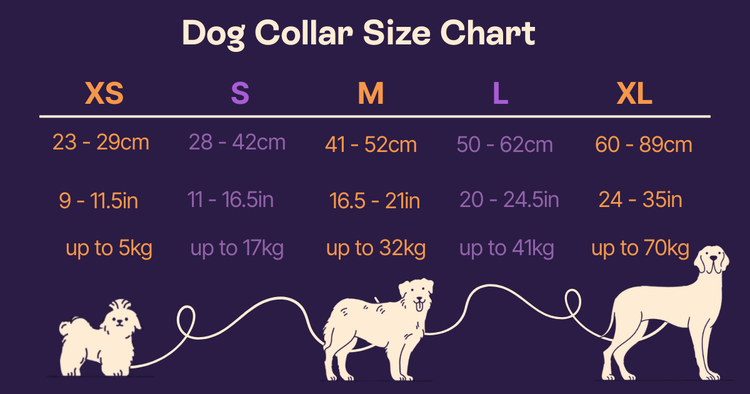
To ensure the best fit for your dog’s collar, you should first measure their neck to see what size they need.
Using a soft tape measure or a ruler and a piece of string, measure all the way around the base of your dog’s neck. Make sure the tape measure (or string) is snug to get an accurate measurement.
Once you have your dog’s measurements, add two more inches (5 cm), and this is the size your dog’s collar should be. If you're using the string, mark the spot on the string and then measure it with a ruler.
Benefits of Dog Harness vs Collar
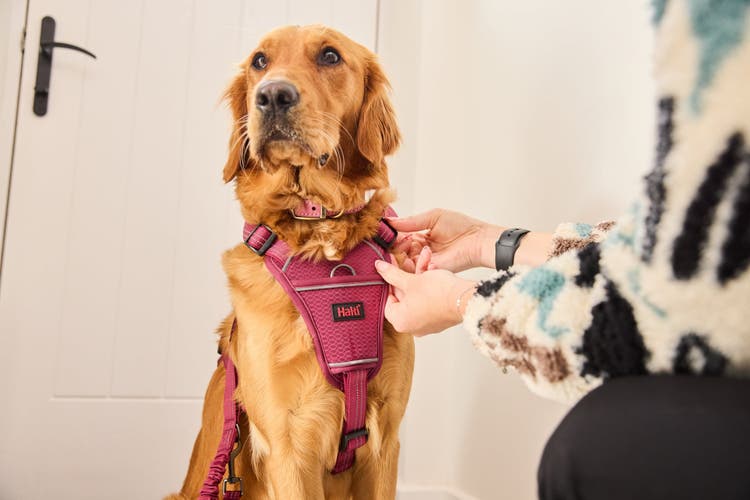
Unlike collars that are just designed to go around your dog’s neck, a harness is made of adjustable straps that go across your dog’s back and chest, securing under their armpits.
A fitted harness offers much more control over your dog while evenly distributing pressure across their neck, chest and back. This allows for unrestricted breathing and complete control while walking.
There is also much more variety with dog harnesses available to suit your dog’s size, activity, and behavioural targets, such as:
- No-pull dog harness - discourages pulling while on the leash
- Soft or quilted dog harnesses - simple and comfortable, ideal for puppies and small dogs
- Car dog harnesses to keep your dog safe and secure while in a vehicle
- Heavy-duty dog harness - intended for active, large or strong dogs for additional security
- and more!
Before deciding what type of dog harness you need, make sure to consider:
- The size of your dog – some designs are only suitable for smaller or larger dogs, respectively.
- Your dog’s Coat – Long-haired, curly-haired, or wire-haired dogs can suffer tangles or mats from wearing a harness
- Your dog’s skin sensitivity – more points of contact mean more chances of rubbing or itchiness.
- Your dog’s temperament – some harnesses are built to aid behavioural training, while others are simple and designed for comfort
Advantages of Dog Harnesses
- Offers more control over your dog
- Distributes pressure more evenly
- Good for dogs that pull
- Great for leash and heel training
- Hard to slip out of
Disadvantages of Dog Harnesses
- Can be intimidating for nervous dogs or dog’s not used to wearing them
- Can cause itching and rubbing if poorly made or ill-fitting
- May cause tangling or matting in long-haired or curly-coated dogs
- Can be more expensive
How to Measure for a Dog Harness
Measuring your dog is a must before you buy a dog harness online. While most dog harnesses are adjustable, you still want them to fit your dog properly so they remain secure and comfortable.
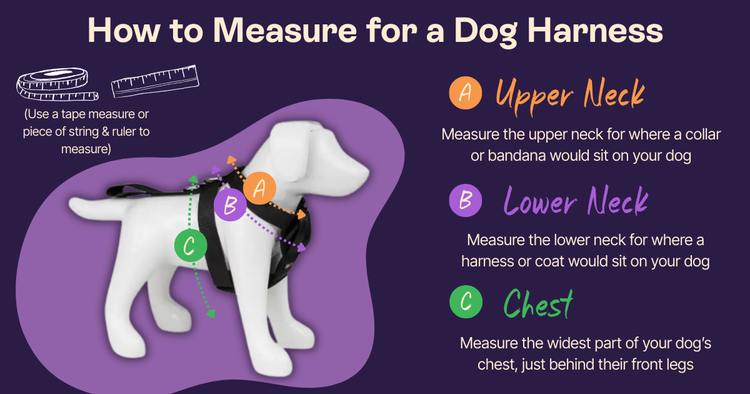
To measure your dog for a harness, you need to measure:
- Upper Neck - This is where a collar would sit.
- Lower neck - This is where a dog harness or coat would sit.
- Chest - This is where the bulk of the harness will wrap around
Between sizes? That's no trouble! Choose the larger of the two sizes and adjust the straps to fit snugly. Just don't forget the Two-Finger Rule.
For young, excitable dogs, or those that pull on the leash, a harness could be considered a safer option. This is because collars offer you less control over your dog and are much easier for dogs to slip out of.
Using a collar may also increase the risk of neck injuries or even choking if the collar gets caught or too much pressure is applied to your dog's neck.
Dog Harnesses Vs Dog Collars
Both collars and harnesses are essential bits of kit for any existing or prospective dog owner. Which is best, however, depends on your dog and their age, size, temperament, and breed.
Generally speaking:
- Harnesses are best for young dogs still in training, or for dogs with breathing difficulties (e.g. brachycephalic breeds)
- Collars are ideal for well-behaved and leash-trained dogs.
Collar Vs Harness for a Puppy
When it comes to puppies, our advice is to try both!
Puppies are young and still learning about the world around them. Introducing them to puppy collars and harnesses early allows them to get used to both before their first walk. That way, they can focus more on the wonder of walkies and learning how to behave outside.
While training your puppy, using a puppy harness can reduce pulling and help maintain control while they learn their manners.
Once your pup is all grown up, you can decide for yourself whether a collar or harness is more suited to them, but until then, both are best!
Dog Collar & Harness FAQs
How you put a harness on will depend on the type of dog harness you choose:
- Some dog harnesses are made with just one buckle on the back (like this Doodlebone Adjustable Airmesh Dog Harness), so you just need to lay the harness flat and open it on the floor, place your dog's front paws in the leg holes, pull the harness up and fasten it closed.
- Other dog harnesses are designed to be more secure, and so have multiple fastenings, like this Halti® Anatomy Dog Harness. For these, you need to open all the fastenings, which should leave a fully flat harness with a head hole. Slip the open harness over your dog's head like a collar, and then fasten it closed around your dog's chest.
- If you've chosen simplicity over style, then you may be able to slip the harness directly over your dog's head, like with this Halti® No Pull Dog Harness. Once on, adjust the straps to sit under your dog's front armpits, tighten the straps, and you're good to go!
The only place in the UK where electric shock dog collars are illegal is in Wales, and this has been the case since 2010, under the Animal Welfare (Wales) Regulations 2010.
Despite the Government having previously announced their intention to bring forth a legislative ban on dog shock collars, they are sadly not prohibited in:
- England
- Scotland
- Northern Ireland
While guidance has been published against the use of shock collars and other aversive training methods, evidence suggests the guidance has been ineffective at stopping the use and sale of these devices.
There are currently campaigns in motion to illegalise the use of shock collars in the UK, with the UK Kennel Club openly supporting a ban on the use and sale of these aversive training devices.
As we've mentioned, it is a legal requirement for dogs to be wearing a collar with ID tags when outside the home, as per the Control of Dogs Order 1992.
This means your dog should be wearing a collar whenever they leave the home. You should also ensure your dog's ID tags and microchip are up to date with your details. That way, if your dog does go missing while out of the home, you have a better chance of being reunited.
No, dogs do not need to wear a collar all of the time. While at home, your dog doesn't need to wear a collar. It's only a legal requirement for your dog to wear a collar with ID tags while outside of the home.
Otherwise, they are free to walk around as bare-necked as the day they were born.
At the end of the day, the only one who knows what is best for your dog is you; if they seem anxious wearing a harness, then stick with a collar for now, and vice versa! You can always introduce them to the other when they're ready. Just make sure your dog is comfortable and secure, and you'll be set for all kinds of adventures!
If you're looking for the best dog harnesses in the UK, or you're trying to find the perfect collar for your pup, then look no further. We've kitted out our dog walking accessories range with fabulous new additions, including collars, leads, harnesses, and more from brands like Halti, Petface®, Ancol®, and more!
Find their perfect fit today!
