
The real cost of caring for pets with long-term health conditions
Key Takeaways:
- Long-term pet health conditions often come with ongoing costs, including medication, check-ups, monitoring, specialist food and supportive supplements.
- Kidney-related treatments are currently the fastest-growing category across dogs, cats and pets overall, followed by skin and liver-related treatments.
- Seasonal changes can affect pet health needs, with medication growth peaking in winter months such as December and January.
- Caring for a chronically ill pet can affect daily routines, finances and emotional wellbeing, with many owners making lifestyle changes to support their pet.
- A consistent routine, symptom tracking and regular communication with your vet can help make ongoing care more manageable.
- Planning ahead for repeat costs can help owners provide consistent care without feeling overwhelmed.

Looking after a cat or dog with long-term pet health conditions is more expensive than standard pet ownership. A long-term health condition is any condition that requires ongoing medical care and affects a pet's daily life, and costs rarely come as a one-off. Instead, they continue over time through medication, regular check-ups, monitoring and the occasional flare-up or emergency.
In the UK, routine dog and cat care is often estimated at around £200 to £400 a year for basic preventative measures alone1. Full annual ownership can reach £1,800 to £2,000 for a dog before adding the costs associated with chronic pet illness2. Once long-term treatment is introduced, that figure can rise quickly, particularly when repeat prescriptions, specialist pet food or ongoing supplements become part of everyday care.
For many owners, the financial side is only one part of the picture. Managing long-term pet health requirements often means ongoing planning, adjustments to daily life and a level of emotional resilience that isn’t always talked about. What begins as a diagnosis can quickly evolve into a long-term commitment that affects routines, finances and even relationships.
We carried out research that explores the realities behind caring for pets with long-term conditions, from rising trends to the lifestyle changes owners are making. Alongside support from our Pet Saver plan, which aims to support owners with the cost of everyday essentials, we’ve provided practical advice to help make ongoing care more manageable and sustainable.
Rising long-term health conditions
The demand for treatments linked to long-term pet health conditions is clearly increasing, with medication and supportive supplements and food showing sustained growth across multiple categories. This isn’t just a short-term shift, as it reflects a broader change in how pets are living, ageing and being cared for.
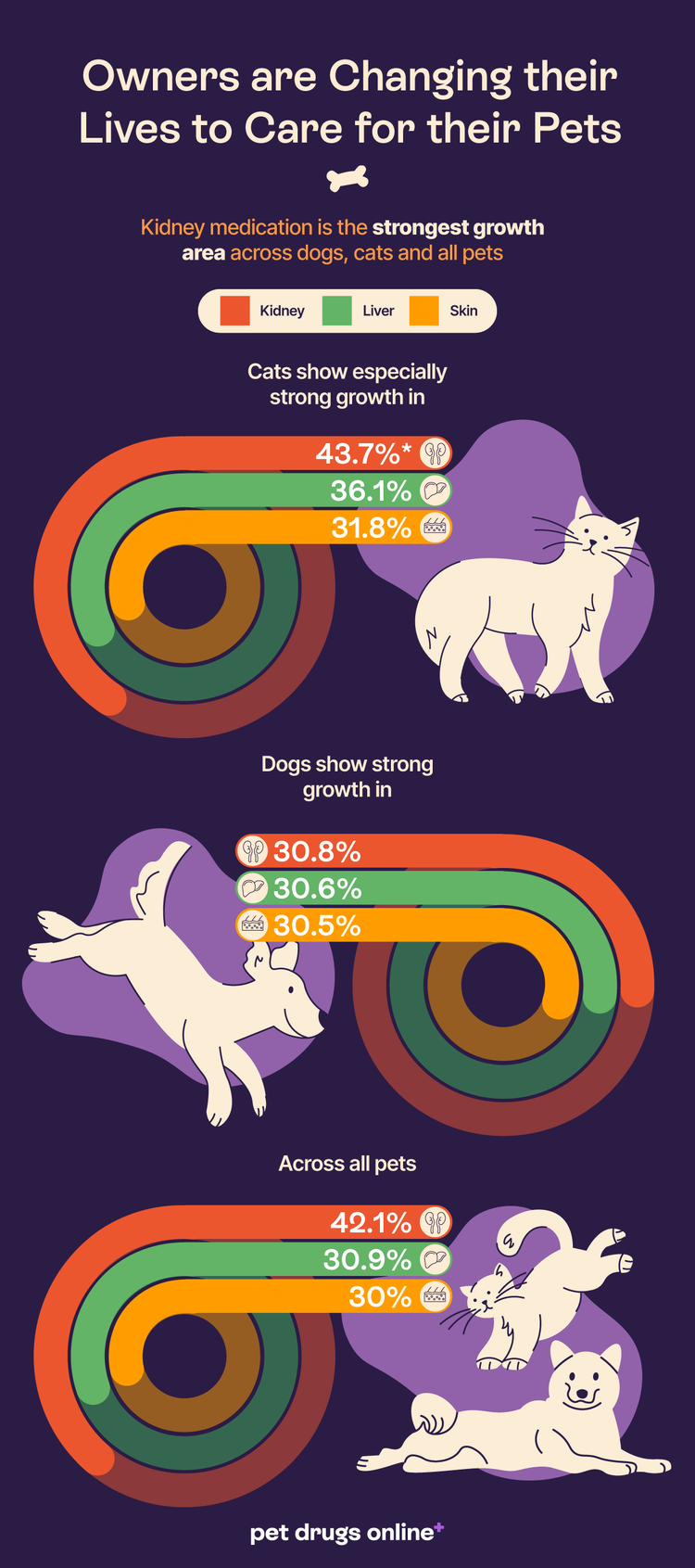
One of the most significant areas of growth is kidney-related treatments, which is currently the fastest-growing category across dogs, cats and pets overall at 42.1%, while skin and liver-related treatments have grown by 30.9% and 30.0% respectively.
In cats, treatments have increased year-on-year by:
- 43.7% for kidney-related treatments
- 36.1% for liver-related treatments
- 31.8% for skin-related treatments
In dogs, treatments have increased year-on-year by:
- 30.8% for kidney-related treatments
- 30.6% for skin-related treatments
- 30.5% for liver-related treatments
These figures highlight just how common long-term pet illness has become, particularly conditions that require continuous medication, monitoring and adjustment over time. Advances in veterinary care mean that pets are living longer, which is a positive outcome, but it also means more animals are developing chronic conditions that require ongoing support.
For owners, this often means moving away from reactive care towards proactive, long-term management. Instead of occasional vet visits, care becomes part of a structured routine that includes medication schedules, dietary considerations and regular health monitoring. Over time, this changes both the financial and emotional nature of pet ownership.
Peak months for pet-related issues
Seasonal trends play a key role in how pet health issues emerge and evolve throughout the year, and this can have a direct impact on both care routines and costs.
December and January are the strongest months for medication growth, with year-on year increases of 28.6% and 26.8%, respectively.
In dogs:
- January – 25.3%
- December – 25.1%
In cats:
- December – 30.1%
- November – 26.2%
These winter peaks are likely influenced by conditions where symptoms are affected by colder temperatures. For example, pets with arthritis or joint-related health conditions often experience increased stiffness during colder months, which can lead to a higher demand for pain relief and mobility support. In fact, joint treatments reach their strongest growth in January, reinforcing the link between seasonal change and symptom severity.
During the summer months, different trends emerge. Warmer weather often brings an increase in skin-related pet illness, driven by allergens, parasites and greater outdoor exposure, but in addition, skin-related treatments peak in January across all pets, indicating that indoor allergens and dry environments also impact some pets’ wellbeing.
For owners, this means that costs are rarely consistent throughout the year. Instead, there are periods of increased spending that require planning and flexibility. Understanding these patterns can make it easier to anticipate costs and prepare for times when additional support may be needed.
Owners are changing their lives for their chronically-ill pets
Beyond the financial commitment, caring for animals with long-term health conditions has a clear and lasting impact on how people live their lives.
For many, the experience begins with uncertainty:
- 27% of owners say they felt shocked when their pet’s condition developed
- 25% of owners worried about doing something wrong or making the condition worse
- 12% of owners said the situation developed so quickly that they struggled to keep up with what was happening.
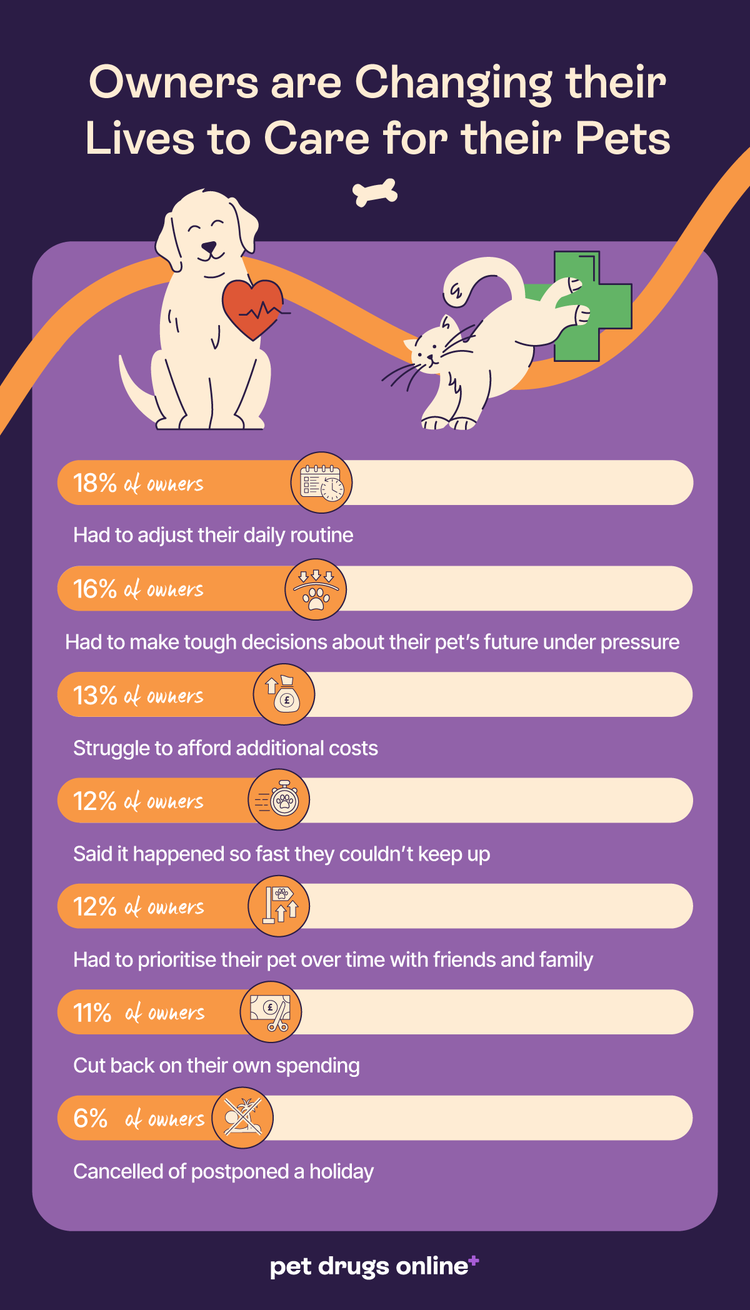
Around 27% of owners say they felt shocked when their pet’s condition developed, while 25% were worried about doing something wrong or making the condition worse. A further 12% said the situation developed so quickly that they struggled to keep up with what was happening. As time goes on, daily life often shifts to accommodate care needs. Around 18% of owners say they have had to adjust their daily routines, whether that means structuring their day around medication schedules, changing walking habits or adapting playtime. Around 12% say they prioritise their pet over spending time with friends and family, reflecting how central care becomes to everyday life.
Financial adjustments are also common. Around 11% of owners report cutting back on their own spending to cover the cost of care, while 6% have cancelled or postponed holidays. For some, the pressure goes further, with 13% saying they struggle to afford additional costs linked to their pet’s condition and 6% needing to find extra income to keep up with ongoing expenses.
The emotional impact is equally significant. Around 41% of owners say they feel sad, while 37% feel worried and 27% feel helpless at times. Around 21% report feeling anxious, particularly when managing flare-ups or making decisions about treatment, and 16% said they felt guilty.
However, it’s not all negative. Around 23% of owners say their relationship with their pet has become stronger, and 10% feel inspired by their pet’s resilience. Another 8% say they feel more confident in their ability to care for their pet over time, showing that experience and routine can bring a sense of control.
This combination of challenge and reward reflects the reality of living with long-term pet illness. While it can be demanding, it can also deepen the bond between pets and their owners in meaningful ways.
How pet owners can manage ongoing care
Dr Sarah Page-Jones, Head Veterinary Surgeon at Pet Drugs Online, shares her practical guidance on how pet owners can manage ongoing care.
Establish a consistent routine
“Pets with long-term health conditions often respond best to a stable daily routine. Keeping feeding times, medication schedules, exercise and rest as consistent as possible can help reduce stress and make symptoms easier to manage. A routine can also help owners to spot any unusual changes more quickly.”
Establishing this consistency can also support dietary management. Introducing specialist pet food tailored to a pet’s condition can play an important role in supporting kidney function, digestive health or allergy management, and consistency maximises its effectiveness.”
Monitor and track symptoms
“Keeping a close eye on your pet’s symptoms can make a real difference in managing their condition.” Dr Sarah recommends noting changes in behaviour, appetite, mobility, energy levels or any flare-ups, “as this can help you to identify patterns and provide useful information to your vet. Even small changes can be important.”
Tracking symptoms over time can help you to feel more in control and allow for earlier intervention if something changes. In some cases, supportive additions such as probiotics help to maintain digestive balance, particularly when it comes to long-term pet health conditions that affect the gut."
Take care of yourself
“Caring for a pet with an ongoing health issue can be emotionally and physically draining, so owners must look after themselves too. Taking breaks, asking for support when needed and speaking openly with your vet about any concerns can help make the experience more manageable. Looking after your own wellbeing will also put you in a better position to care for your pet.”
Given the emotional strain highlighted by many owners, this advice is just as important as any medical routine. Sustainable care depends not just on what you do for your pet but on how well you’re able to support yourself in the process.

Managing the real cost of pet illness
While the cost of caring for animals with long-term pet health conditions can be high, there are ways to make it more manageable with the right approach.
Planning ahead is one of the most effective strategies. Setting aside a monthly budget for medication, check-ups, and ongoing treatments can reduce the impact of seasonal cost spikes. Spreading costs where possible and anticipating periods of increased need can make a noticeable difference over time.
Diet also plays an important role in long-term care. Choosing the right pet food can support your pet’s condition and may help to reduce complications, particularly when recommended as part of a veterinary treatment plan. Similarly, targeted supplements such as probiotics can contribute to overall wellbeing when used appropriately.
Open communication with your vet is another key factor. Discussing treatment options, asking about alternatives and exploring preventative strategies contribute to ensuring your pet receives the right level of care while keeping costs as manageable as possible.
Ultimately, managing long-term pet health is about finding a balance between cost, care and quality of life. With the right support and planning, you can provide consistent, effective care without feeling overwhelmed.
A shared experience
Caring for a pet with a long-term pet illness isn’t always easy. It requires patience, planning and, at times, difficult decisions. But it also reflects the strength of the bond between pets and their owners.
While the financial and emotional costs can be significant, so too are the rewards. Many owners find that, despite the challenges, the experience brings them closer to their pet and gives them a deeper appreciation for the role they play in their wellbeing.
With the right support, practical strategies and access to affordable treatment, it’s entirely possible to manage ongoing pet health needs while ensuring pets continue to live happy and comfortable lives.
If you’re seeking support for your pet with a long-term health condition, check out PetSaver, our premium plan that helps owners save on their everyday essentials.
Methodology
1 www.pets4homes.co.uk/pet-advice/the-real-cost-of-vet-care-for-dogs-and-cats.html
2 https://www.battersea.org.uk/pet-advice/dog-advice/cost-owning-dog