
{block: mb:12px}Understanding Cat Body Language
Our pet’s happiness is always our priority, and we’d all love nothing more than to know what’s going on in their fluffy little heads. While cats can’t communicate with us in the traditional sense, there are still some ways we can study our cat’s body language to better understand how they’re feeling.
Contents:
- Cat Tail Body Language
- What do Cat Meows Mean?
- Signs of a Happy Cat
- How to Tell if Your Cat is Scared
- How to Tell if Your Cat is Sick
How Do Cats Communicate?
Despite the obvious barriers between human and feline language, our cats still find ways to tell us how they’re feeling and what they want through a variety of different ways. This includes the sounds they make, their body language, and their behaviours.
Here are some of the most notable ways your cat may try to communicate with you and what they mean.
Cat Tail Body Language
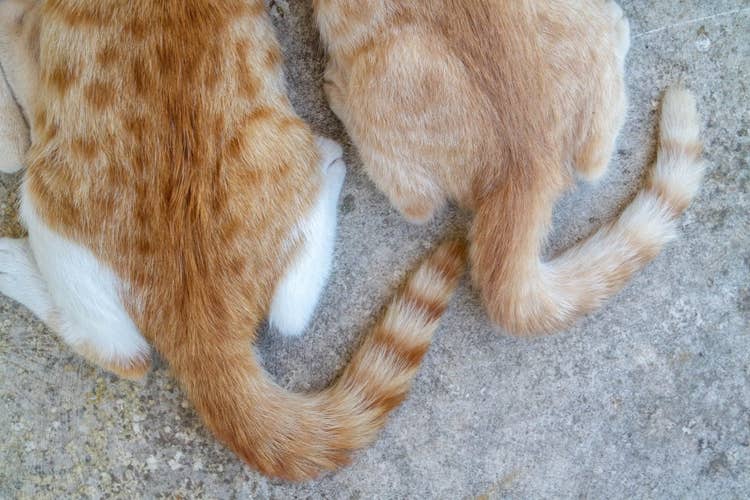
One of the most reliable ways to tell your cat's feelings is through their tail.
A cat’s tail may seem like a separate entity, but it is connected directly to the cat's spinal column through various nerves that allow them to control precise movements that we will translate for you:
- High Cat Tail— The most common position of your cat's tail is likely high and pointing into the air. This is a sign your cat is confident and content, so they will likely stay up while they’re pottering around your house or garden, wherever it is they consider their territory. If you notice a little twitch in your cat’s tail, this is also a sign of happiness!
- Low Cat Tail— Typically, a low cat tail signals your cat is in a mood, whether that’s stress or aggression. There are, however, some breeds of cats that will carry their tail low a lot for no reason at all.
- Curved Cat Tail— If your cat’s tail is curved almost like a question mark, it could signify that they’re ready to play. Grab their favourite cat toy and see what happens!
- Tucked Cat Tail— If your cat has curved its tail and tucked it up under it, it could be a sign of fear, much like when a dog does it, and something could be making it nervous.
- Puffed-up Cat Tail— If your cat’s tail has puffed up or bristled, this is a sure sign of anger, stress or fear as they try to make themselves appear bigger than whatever is fighting them. They may also arch their back and go up on their toes.
- Swishing Cat Tail— If your cat’s tail is swishing side to side, it likely means your cat has focused all its attention on something, likely a toy or something they saw move, which they think is a bird or a small animal, and has brought out its hunting instinct.
- Wrapped Cat Tail— If your cat has wrapped its tail around itself, you or even another cat or pet in the home, this is its way of conveying love or friendship, much like how we as humans hug one another with our arms.
- Whipping Cat Tail— When a cat whips its tail frantically from side to side (unlike careful swishing), this is usually a sign that it is angry and trying to ward you or another animal away.
What do Cat Meows Mean?
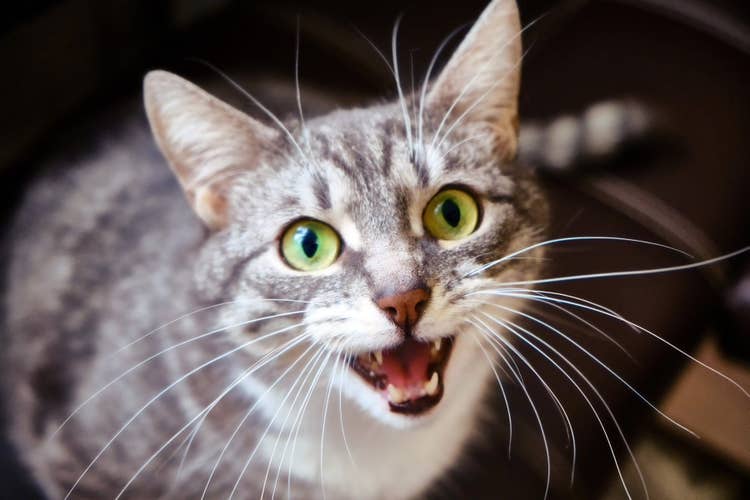
Did you know cats can make more than 21 different vocalisations, whereas dogs can only make ten. Each of these noises has a different meaning, and understanding your cat's noises is a great way to know what’s happening inside their heads.
Some of the most common sounds cats make are:
- Purring— Many veterinarians still aren’t sure why cats purr, as it can occur for several reasons, but most cats tend to do so when they’re particularly happy or content. That said, cats may also purr when they are sick, nervous or in pain as a way to self-soothe.
- Meowing— This noise is reserved for cats communicating with their humans, as it’s not something they tend to do with other cats, apart from kittens who do so when hungry. When your cat meows at you, it’s often because they want you to do something, such as feed them, clean their litter tray, or simply to welcome you home.
- Chattering— Cats commonly chatter when they are watching birds or squirrels from the window. While this sound was initially thought to be a sign of frustration, some specialists now believe cats chatter to mimic the sounds of prey just long enough to distract their prey before they can pounce.
- Chirping— The high-pitched chirp noise cats make is usually heard from mother cats who are rounding up their kittens, but they may also do so with their humans to get their attention so they can follow them to a food bowl or maybe even a toy they want to play with.
- Hissing— This is the most common sign of aggression in cats as they bare all their teeth while doing so. However, many cats also hiss when afraid of something, perceiving it as a danger they’re trying to ward off. Hissing can also lead to spitting, a much sharper and shorter hiss noise, usually accompanied by a swipe or bat attack.
- Yowling— A cat’s yowl is a peculiar and drawn-out meowing or howling sound that cats often make when in distress, such as when stuck behind a closed door. Female cats that haven’t been spayed may also yowl as a kind of mating behaviour to alert male cats of their presence and instinct to breed.
Signs of a Happy Cat
While their tails and noises are the easiest way to understand what your cat is feeling, some other body language cues can give you some insight into whether your cat is happy.
Some signs of a happy cat include, but are not limited to:
- A relaxed posture: Sitting, standing or lying comfortably (even if they don’t look it to us).
- Sleeping near you or in communal spaces out in the open, showing they know they’re safe.
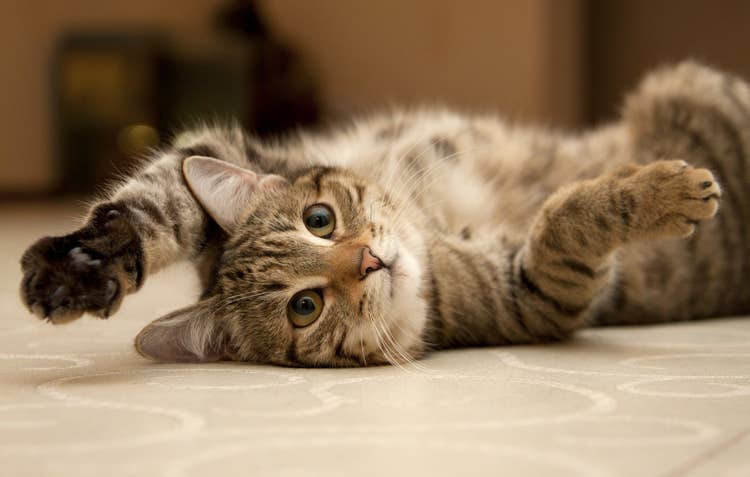
- Exposing their belly and rolling or flopping onto the floor before you. This isn't necessarily their way of saying they want their belly rubbed, but it is more to show they feel safe enough around you to expose their most vulnerable parts.
- Slow blinking: Some owners call this a “Kitty Kiss,” when your cat slowly blinks at you, showing that it feels safe and comfortable around you.
- Rubbing against you or nearby objects shows a cat marking their territory using the pheromones released from their faces. Cats often do this when you come home from somewhere else, marking you as theirs and covering you in their scent.
- Playful behaviours, such as swishing their tails, getting low to the ground, and nipping or batting.
Any of these signs (as well as many more) show you have a happy and comfortable cat, which is great news! These are things to look out for, particularly when bringing a new cat home or introducing them to other pets.
How to Tell if Your Cat is Scared
Cats can feel fear, stress, and anxiety just like humans, but since they can’t tell us that's what they’re feeling, it’s important to recognise the signs of fear in cats so you can know if your cat is feeling uncomfortable.
Some of the signs of fear in cats include:
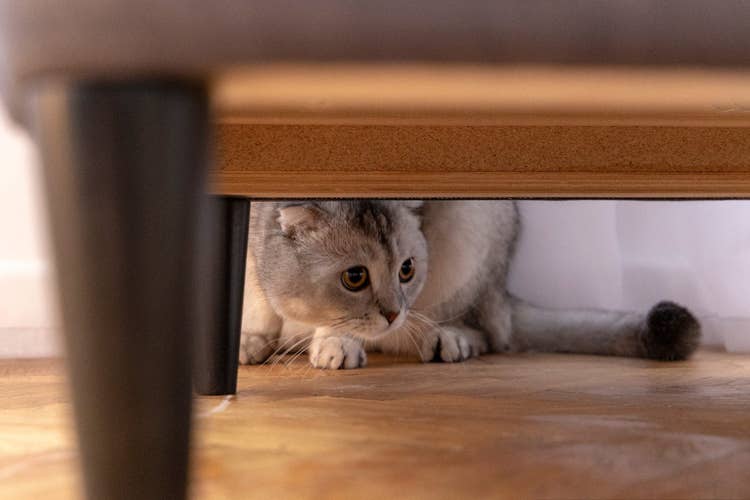
- Hiding, particularly under a bed or in small enclosed spaces.
- Making themselves look smaller, usually by crouching low to the ground and lowering their heads.
- Tucking their tails beneath them or swishing the tip from side to side.
- Arching their back and puffing out their fur to try and appear bigger and more threatening.
- Aggressive behaviours such as hissing, spitting, scratching or biting.
- Having wide eyes with big pupils (this may also be a sign of playfulness, but without any of the normal playful behaviours listed above.
- Moving their ears very quickly or having them flat against their heads. Fast-moving ears are usually a sign they’re trying to listen for something, whereas flattening them against their heads is a way to make themselves appear smaller.
- Peeing or pooping outside of their litter tray. If your cat usually goes to the bathroom outdoors, doing so in the home can also be a sign of fear or anxiety.
If your cat is showing signs of anxiety or fear, it’s essential to find the cause so you can help them feel more comfortable. Sometimes, a cat stress reliever like the Feliway Optimum Diffuser can help them feel more relaxed. You can learn more about anxiety in cats in our Guide to Anxiety in Pets.
How to Know if Your Cat is Sick
Cats don’t often show many signs if they’re sick or injured right away, so understanding the subtle changes to their body language is essential so you can notice as soon as possible that something is wrong and get them the treatment they need.
Some of the signs your cat is ill include:
- Hiding, especially in small spaces or under beds.
- Changes in their mood or normal behaviours, such as not wanting to play, or changes in their grooming habits, like overgrooming or under-grooming.
- Changes in their eating or drinking habits. If your cat is noticeably gaining or losing weight, this can also be a sign of illness. You can learn more about why your cat won’t eat and what you can do to help here.
- Being less vocal than usual.
- Lethargy or sleeping more than usual.
- Changes in their breathing, such as rapid breathing or shortness of breath.
- Visible injuries, such as limping, holding up their paw, blood in their fur or any scabbing on their skin.
- Changes in their skin or coat, such as hair loss, dry skin, inflamed or red skin, and more.
- Discharge from their eyes or nose.
If you ever notice any of these symptoms in your cat, it could be a sign of illness. Having your cat checked by a veterinary professional for a full diagnosis is important. Even if the behaviour change might seem minor, it could still be a sign that something is wrong.
Understanding your cat’s behaviour is one of the best ways to better understand what’s happening with them physically and emotionally. If you notice any negative changes to your cat’s behaviour, it’s crucial you contact your vet for a full diagnosis, as many issues are easier to sort when spotted early on.
If your cat is showing signs of stress or anxiety, there are some options available for you without a vet prescription that can help your cat feel more settled, especially after a big life change, such as moving home. You can view our range of cat anxiety treatments, or get in touch with us, and a member of our team will be happy to help.

This post is an opinion and should only be used as a guide. You should discuss any change to your pet’s care or lifestyle thoroughly with your vet before starting any program or treatment.
