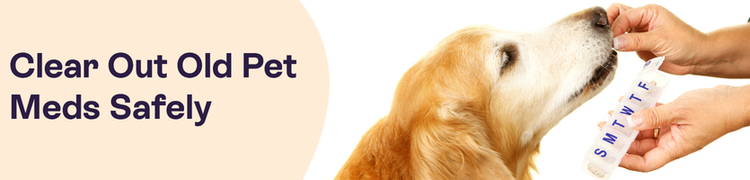
What Should You Do With Unused or Expired Pet Medication?
There are several reasons a pet owner might have animal medication they no longer need. Your pet may have completed its treatment, their medication may have been changed by a vet, the medication may have expired, or you may simply have ordered more than you need.
Whatever the reason, if you’ve got excess pet medication at home, you’ve probably already considered your options. You could throw it away, flush it down the toilet, or keep it for the future in case your pet needs it again, but it’s important to stop and think.
While these may seem like reasonable, convenient options, none of them are recommended. Incorrectly disposing of animal medicines can pose risks to people, pets, wildlife and the environment.
If you’re wondering how to safely dispose of your unused or expired pet medication, this blog is for you.
Reviewed by Dr. Sarah Page-Jones (BVSc MBA CertSAS PhD MRCVS)
Why Can't I Just Throw It Away?
While it may not initially seem like a big deal, disposing of your animal medication incorrectly can have a significant negative impact on other animals, people and the environment.
When thrown away, these medicines could be ingested by children, vulnerable adults, other pets or wildlife. If people or animals take medication that wasn't specifically prescribed for them, it can cause serious health problems. Flushing medicines down the toilet can also introduce pharmaceutical ingredients into wastewater systems, potentially affecting the environment.
So what's the right way to get rid of unused or expired medication?
If you have unused or expired pet medication at home, the safest option is usually to return it to a veterinary practice or other approved collection scheme for safe disposal. This helps reduce the risk of environmental contamination, accidental ingestion and inappropriate use of leftover medicines.
Animal Medicines Amnesty
You may not be able to dispose of unwanted pet medication through every veterinary practice, so it's worth checking what return schemes are available in your area.
Animal Medicines Amnesty is a good example of a return scheme you can take advantage of. It's an annual initiative that runs every November and encourages owners to return unused medicines. Taking part in this initiative helps prevent environmental contamination, supports responsible medicine use, and is particularly important for antibiotics.
To find out more about the scheme and locate participating veterinary practices, visit the Animal Medicines Amnesty website.
What Medicines Can Be Returned?
Participating vets accept a wide variety of prescription medication, including:
● Antibiotics
● Tablets and capsules
● Liquid medicines
● Creams and ointments
● Flea and tick treatments
● Worming treatments
● Opened or unopened medication
● Expired medication
It's important to check the guidance from your participating practice, as some schemes may have specific requirements regarding sharps, needles or other clinical waste. Practices will not be able to provide refunds for returned unused medicines.
Why Is Antibiotic Disposal Particularly Important?
While you may be tempted to save antibiotics "just in case", this is not recommended. Antibiotics are prescribed for a specific infection, in a specific animal, at a specific dose and duration. What's appropriate today may be inappropriate in six months' time. The infection may be different, the antibiotics may have expired, or the dose may no longer be suitable.
Using antibiotics when they aren't needed, or using leftover antibiotics without veterinary guidance, can contribute to antimicrobial resistance. This makes bacterial infections more difficult to treat in both animals and people.
Wondering What to Do Next?
Taking part in the Animal Medicines Amnesty is a simple, effective way to dispose of unwanted pet medication safely and responsibly. If you'd like to get involved, follow these steps:
1. Check Your Medicine Cupboard
Take a look through any cupboards or drawers where medication may be stored. Look out for medicines that are expired, no longer needed, or left over from previous treatments.
2. Gather Any Unwanted Medicines
Collect any unused or expired medications you find, including tablets, liquids, creams, flea and worming treatments, and antibiotics. If you're unsure whether a particular medicine can be returned, check with the participating practice beforehand.
3. Find a Participating Veterinary Practice
Use the Animal Medicines Amnesty website to find out which veterinary practices are taking part in the scheme and check any guidance they may have regarding returns.
4. Return Them for Safe Disposal
Take your unwanted medicines to a participating practice, where they can be disposed of safely and responsibly. This helps reduce the risk of environmental contamination, accidental ingestion and inappropriate use of leftover medication.
Taking a few minutes to clear out old pet medication can help protect your pet, other animals and the environment, while also supporting the responsible use of veterinary medicines.
This post is an opinion and should only be used as a guide. You should thoroughly discuss any change to your pet’s care or lifestyle with your vet before starting any program or treatment. We update content regularly to reflect the latest pet health standards.
Hannah Griffiths
Senior Marketing Manager
Hannah Griffiths is the Senior Marketing Manager at Pet Drugs Online, overseeing content strategy and customer engagement initiatives. She is passionate about making pet health information accessible and easy to understand. Hannah collaborates closely with Pet Drugs Online's veterinary team, including Sarah Page-Jones, to help ensure all content is accurate, trustworthy and aligned with current veterinary best practice.