
The Rise of Pet Wellness and What Actually Works
The wellness industry has transformed how many of us approach our own health. From supplements and clean eating to mindfulness and preventative wellbeing, modern lifestyles are increasingly centred around feeling our best. Now, those same habits are making their way into our pets’ lives.
Across the UK, pet owners are introducing everything from specialist vitamins and supplements to pet wellness routines and diet changes inspired by human health trends. Whilst many owners are motivated by the desire to improve their pets’ wellbeing, not every trend is backed by veterinary evidence, and some may be more beneficial than others.
To better understand how wellness culture is influencing pet care trends, we surveyed 1,500 UK pet owners about the habits they have adopted for their pets. The findings reveal which trends are proving most popular, how attitudes differ across age groups and regions, and whether owners believe these changes are making a positive difference.
However, whilst it can be tempting to apply human health trends to our animals, it’s important to remember that pets have very different nutritional and healthcare needs. Seeking professional veterinary advice and choosing products specifically designed for animals remains the safest way to support their long-term wellbeing.
Supplements to spa days: the wellness trends transforming pet care
The UK’s growing interest in pet wellness is influencing how owners care for their animals in a variety of ways.
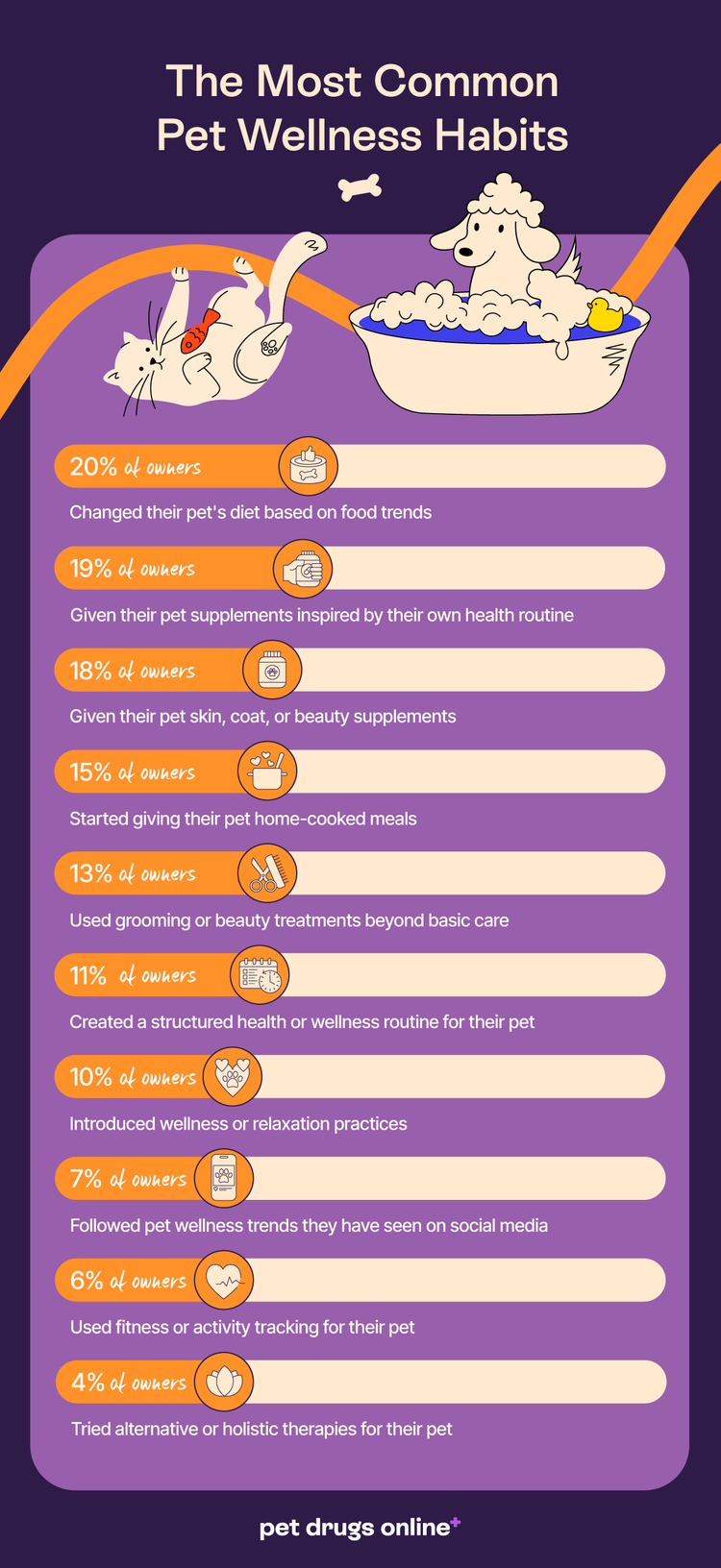
Dietary changes are among the most common trends. One in five pet owners (20%) have changed their pet’s diet based on food trends such as clean eating or vegetarian. Meanwhile, 19% have given their pet supplements inspired by their own health routines.
Some owners have gone beyond nutrition. Around 13% have used grooming or beauty treatments that extend beyond basic care, including spa treatments and facials. A further 10% have introduced wellness or relaxation practices such as structured calming routines or even meditation.
For many owners, these changes appear to be delivering positive results. Nearly four in ten (39%) believe the lifestyle habits they applied have improved their pet’s overall health. More specifically, 34% reported noticeable benefits such as a healthier coat, improved digestion or increased energy levels.
Preventative health appears to be a major motivation. Almost three in ten owners (29%) introduced wellness-inspired habits in the hope of preventing future health problems before they arise.
However, the results also suggest some uncertainty. More than one in ten pet owners (12%) expressed concerns that some of the changes they have made could potentially be unhealthy. In fact, 89% said they would not actively recommend these wellness trends to other pet owners.
The findings suggest that whilst interest in pet health supplements, specialist diets and wellness routines continues to grow, many owners remain unsure about which trends genuinely benefit their pets.
If you’re looking to support your pet’s nutrition safely, choosing products specifically formulated for animals is essential. Specialist options available through our pet food and supplement ranges are designed to ensure that pets receive balanced nutrition tailored to their needs.
How owner age influences pet health habits
Age plays a significant role in how pet owners approach pet wellness trends.
Younger owners are often the most enthusiastic adopters. Among 18-24-year-olds, 36% have given their pets supplements inspired by their own health routines, making them the age group most likely to do so. They’re also the most likely to provide skin, coat or beauty supplements, with 28% reporting they have done this.
Meanwhile, people aged 25-34 lead the way when it comes to dietary trends. More than a third (34%) have changed their pet’s diet based on food movements such as clean eating. This age group is also the most likely to follow wellness trends seen on social media, with 13% admitting these platforms have influenced their decisions.
At the other end of the spectrum, pet owners aged over 65 appear far less influenced by wellness culture. More than six in ten (61%) said they have not made any lifestyle changes for their pet based on wellness trends.
Interestingly, older owners may be more convinced by the results when they do make changes. Among those aged 55-64, over half (51%) believe wellness-inspired habits have improved their pet’s overall health. By comparison, only 36% of people aged 18-24 said the same.
That said, younger owners most often notice specific changes. More than four in ten (41%) pet owners aged 18-24 reported benefits such as improved coats, better digestion or increased energy levels.
Concerns are also more common amongst younger generations. 16% per cent of those aged 25-34 worry that some of the wellness habits they tried could be unhealthy, compared to just 4% of those aged 55-64.
The data suggests that whilst younger pet owners are driving many modern pet care trends, they may also be more likely to question whether those trends are genuinely beneficial.
Britain's pet wellness hot spots revealed
The popularity of different pet care trends varies considerably across the UK.
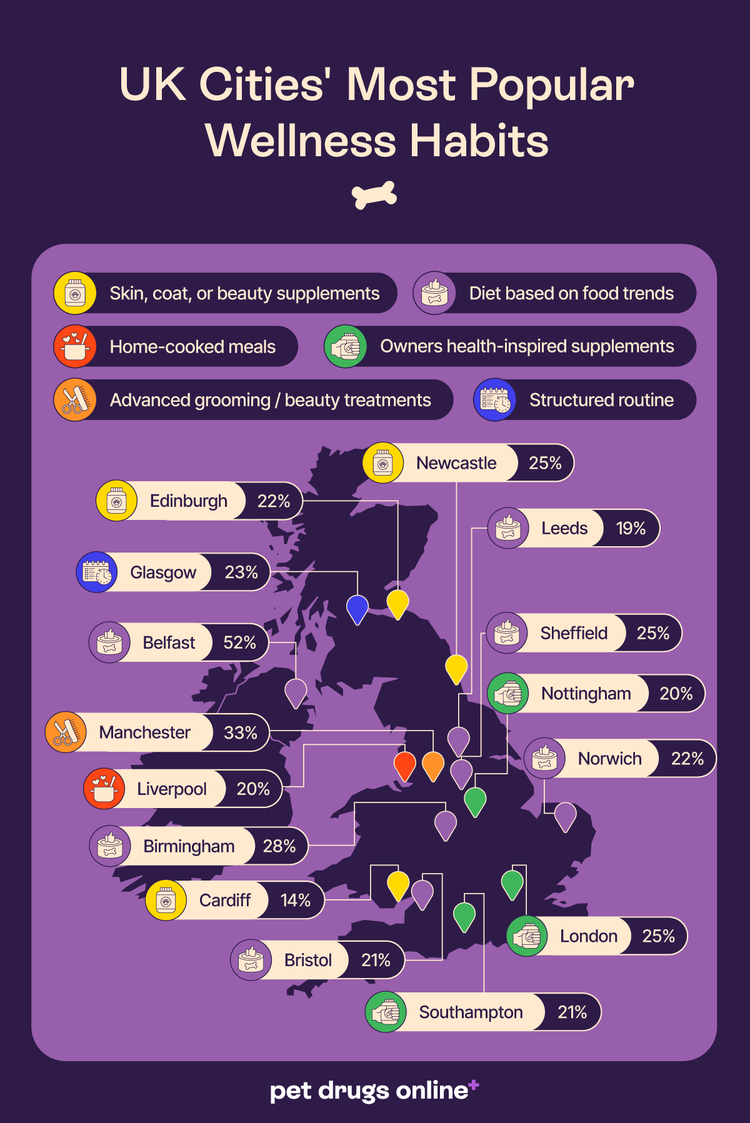
Belfast emerged as the city most likely to embrace dietary wellness trends, with 52% of pet owners saying they had changed their pet’s diet based on food trends such as clean eating
Other cities also showed a strong preference for diet-led approaches. Birmingham (28%), Norwich (22%), Bristol (21%), Leeds (19%) and Sheffield (18%) all reported food-trend-inspired diets as their most popular wellness habit.
Supplement use was particularly common elsewhere. In London, 25% of owners said they gave their pets supplements inspired by their own health routines. Southampton followed closely behind at 21%, whilst Nottingham recorded 20%.
Beauty-focused trends proved especially popular in certain areas. Manchester stood out, with 33% of owners reporting they had used grooming or beauty treatments beyond basic care, including spa treatments and facials.
As for skin and coat supplements, they’re most popular in Newcastle (25%), Edinburgh (22%) and Cardiff (14%).
Meanwhile, Glasgow took a different approach. Rather than focusing on diets or supplements, 23% of pet owners said they had introduced a structured health or wellness routine for their pet.
Liverpool’s most popular trend was home-cooked meals, chosen by 20% of respondents.
The regional differences highlight how diverse the UK’s approach to pet wellness has become, with owners tailoring trends to suit their own beliefs and priorities.
Vet approved ways to support your pet's wellbeing
Dr Sarah Page-Jones, Head Veterinary Surgeon at Pet Drugs Online, believes the growing focus on pet wellbeing comes from a positive place, but urges owners to make decisions based on evidence rather than trends.
“Many owners want to provide the very best care for their pets, and that’s encouraging to see. However, what works for humans does not necessarily work for dogs, cats or other animals. Their nutritional requirements, body systems and health needs are very different.”
When considering lifestyle changes for pets, Dr Page-Jones recommends focusing on evidence-based approaches rather than following every new wellness trend. Her key recommendations include:
Prioritise balance nutrition
A complete and balanced diet remains one of the most important factors in maintaining good health. Owners should choose food appropriate for their pet’s age, breed, size and health requirements.
Use supplements carefully
Not every pet requires supplements. Whilst some animals may benefit from targeted support, owners should seek veterinary advice before introducing new products. Choosing dedicated pet health supplements designed specifically for animals is essential.
Support digestive health
A healthy digestive system plays a major role in overall wellbeing. Understanding factors that influence gut health can help owners to make informed decisions about diet and nutrition. Resources such as our dog gut health guide can provide useful guidance.
Maintain regular exercise
Exercise remains one of the most effective ways to support both physical and mental wellbeing. Daily activity tailored to your pet’s age and ability helps to maintain fitness and a healthy weight whilst providing valuable enrichment.
Don't overlook routine healthcare
Preventative healthcare measures such as vaccinations, parasite prevention, dental care and routine check-ups continue to play a crucial role in supporting long-term health.
According to Dr Page-Jones, the most successful wellness routines are often the simplest.
“Consistency is far more important than following the latest trend. A balanced diet, appropriate exercise, preventative healthcare and regular veterinary check-ups will always form the foundation of good pet health.”
Putting your pet first
The rise of pet wellness reflects how deeply owners care about the health and happiness of their animals. From dietary changes and supplements to structured routines and beauty treatments, many people are actively seeking new ways to support their pets.
However, the survey findings also reveal a degree of uncertainty. Whilst many owners report positive outcomes, relatively few would actively recommend the wellness trends they have tried, and some remain concerned about potential risks.
The safest approach is to focus on evidence-based care and products specifically developed for pets. Whether you’re exploring new pet food options, researching supplements or looking to support digestive health, professional veterinary guidance should always come first.
Methodology
Pet Drugs Online commissioned an independent survey of 1,500 UK pet owners in March 2026 to explore how wellness trends are influencing pet care habits across the country.
Participants were asked about the lifestyle changes they had introduced for their pets, including dietary adjustments, supplement use, grooming treatments, wellness routines and other health-focused behaviours.
The survey also examined whether owners believed these changes had delivered measurable benefits, their motivations for introducing them and any concerns they had regarding potential health impacts.
Additional analysis was conducted across age groups and major UK cities to identify demographic and regional differences in attitudes towards pet wellness and preventative pet healthcare.