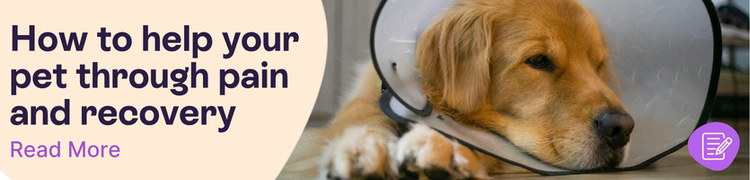
Helping your pet through pain and recovery
If your dog or cat is in pain, the most effective way to help is to work with your vet on the cause, then make home life easier and more comfortable. Simple changes like non-slip flooring, supportive bedding, maintaining a healthy weight and reducing stress can make a real difference to how your pet feels day to day.
When your vet has diagnosed the problem and started treatment, many owners are left wondering what comes next.
The reality is that recovery happens at home. The small things your pet does every day, getting up, eating, resting, moving around the house and settling at night, all affect their comfort.
This guide explains the practical steps you can take to support a dog or cat living with pain, recovering from surgery, or dealing with a long-term condition.
Reviewed by Hannah Nott BVSc MRCVS
On this page
- How to tell if your pet is in pain
- Is my pet in pain or just getting older?
- What pain does to your pet's behaviour
- Making your home easier to live in
- Weight and joint health
- Helping an anxious pet settle
- Keeping your pet mentally stimulated during recovery
- Helping a pet recover after surgery
- Caring for a cat in pain
- When to call your vet urgently
- Frequently asked questions
How to tell if your pet is in pain
Most pets show pain through changes in behaviour rather than obvious signs. The biggest clue is often that they stop doing things they used to do comfortably.
Because dogs and cats cannot tell us what hurts, owners often notice subtle changes first.
Signs of pain in dogs
Your dog may:
- Move stiffly after resting
- Slow down on walks
- Hesitate before jumping onto furniture or into the car
- Struggle with stairs
- Pant despite little exercise
- Lick the same area repeatedly
- Be reluctant to play
- Sleep less comfortably
- Become less interested in food
Signs of pain in cats
Cats are particularly good at hiding discomfort and many owners miss these subtle signs of pain.
Watch for:
- Jumping less often
- Taking longer to reach favourite spots
- Reduced grooming
- A scruffy or matted coat
- Hiding more than usual
- Changes in litter tray habits including toileting outside of the litter tray
- Sleeping in unusual places
- Sitting hunched or withdrawn
It's important to remember that purring does not always mean a cat is comfortable. Cats may also purr when they are stressed or unwell.
Is my pet in pain or just getting older?
Slowing down is not simply part of getting older. In many cases, it can be a sign that movement has become uncomfortable.
Many owners assume stiffness, reduced activity and reluctance to exercise are normal signs of ageing. Often, there is an underlying issue that needs investigating.
Osteoarthritis is one of the most common causes. Research from the Royal Veterinary College's VetCompass programme found osteoarthritis affects a substantial number of UK dogs and can impact quality of life for many years (Anderson et al., Scientific Reports, 2018).
Osteoarthritis is also very common in older cats. Studies have shown that many senior cats have signs of osteoarthritis on X-rays, even when owners have not recognised the symptoms (Hardie et al.).
If your pet is less active than they were 12 months ago, it is worth discussing pain with your vet rather than assuming it is age-related.
What to bring to your vet appointment
A short video can be more useful than a description.
Try to:
- Record stiffness, limping or difficulty jumping
- Note when symptoms occur
- Track good and bad days
- Keep a record for at least 1 week
Patterns often provide valuable information that helps your vet assess your pet more accurately.
What pain does to your pet's behaviour
Pain affects mood as well as movement. Behaviour changes are often one of the earliest signs that something is wrong.
A pet in pain may appear anxious, withdrawn or irritable.
Research reviewing canine behaviour referrals found painful conditions frequently contribute to behaviour problems that owners initially assume are training issues (Mills et al., Animals, 2020).
Common changes include:
Becoming less tolerant
A normally gentle pet may growl, snap, or pull away when touched near a painful area.
Seeking more reassurance
Some pets become clingy and follow their owners everywhere because discomfort makes them feel vulnerable.
Withdrawing from family life
Others do the opposite and spend more time resting alone.
Sleeping poorly
Pain can make it difficult to get comfortable, particularly at night.
Having accidents indoors
Difficulty standing, moving, or accessing a litter tray can lead to accidents around the home.
If your pet's behaviour has changed suddenly, speak to your vet before assuming it is a training or behavioural issue.
Making your home easier to live in
Home adaptations reduce strain on painful joints and make daily activities easier. Small changes often have a bigger impact than owners expect.
Improve grip indoors
Hard floors can be challenging for pets with mobility problems.
Adding rugs or no slip mats can improve confidence and reduce slipping.
Reduce jumping
Jumping places significant force through joints when landing.
Use ramp or stepsto help your pet reach their favourite resting spots and get in and out of the car.
Raise feeding stations
For pets struggling with neck or shoulder discomfort, raised cat or dog feeders can make mealtimes more comfortable.
Upgrade their bed
A supportive orthopaedic bed cushions pressure points and helps maintain comfort during rest.
Keep essentials nearby
Food, water, bedding, and litter trays should be easy to access.
Keep them warm
Cold weather can worsen stiffness. Warm resting areas and appropriate outdoor protection can help sensitive pets stay comfortable.
Weight and why it matters more than anything else you can buy
Maintaining a healthy weight is one of the most effective ways to reduce pressure on painful joints. Excess weight increases strain on joints every time your pet stands, walks or climbs.
Weight loss to an ideal body weight has been shown to improve mobility and reduce lameness in overweight dogs with osteoarthritis (Marshall et al., Veterinary Research Communications, 2010).
If your pet needs to lose weight:
- Ask your vet for a target weight
- Talk to your vet about weight clinics
- Measure meals accurately
- Use food rewards from the daily allowance
- Monitor progress regularly
- Many vet practices are more than happy for you to pop in to weigh your dog
If exercise is restricted, reducing calorie intake becomes even more important.
Helping an anxious pet in pain settle
Pain and anxiety often go together. Helping your pet feel secure can improve rest and support recovery.
Calming products do not treat pain, but they may help some pets settle more comfortably.
Calming supplements
Calming supplements may provide additional support for some anxious pets.
Always tell your vet about any supplements your pet receives alongside prescribed treatment.
Keep routines predictable
Pets recovering from illness or injury often benefit from consistent routines, feeding times and sleeping areas.
Helping a pet recover after surgery
Successful recovery depends on following your vet's instructions closely, even when your pet appears to feel better. Healing tissue often takes longer than owners expect.
Follow exercise restrictions
Avoid increasing activity earlier than advised by your vet. Whilst you are restricting your pet’s exercise, reduce their food intake to reduce the risk of weight gain.
Protect the wound
Use suitable recovery aids such as recovery suits and comfy collars if recommended. Make sure your pet doesn’t get the wound wet or muddy until the vet signs them off.
Check the wound daily
Contact your vet if you notice:
- Increased redness
- Swelling
- Discharge
- Bad odour
- Open wound edges
- Take pictures to show the vet or nurse
Prepare your home
Before bringing your pet home:
- Set up a comfortable bed
- Improve grip on slippery floors
- Make food and water easy to reach
- Prepare enrichment activities
Keeping your pet mentally stimulated during recovery
Pets need mental exercise when physical exercise is limited. Enrichment helps prevent frustration and boredom during recovery from surgery.
Suitable options include:
- Lick mats
- Snuffle mats
- Puzzle feeders and slow feeders
- Gentle reward-based training
- Simple scent games
If food is being used during enrichment, take this out of your pet’s breakfast or tea, as their physical exercise is being restricted. For cats, keep these play sessions on floor-level to provide enrichment without encouraging excessive jumping.
Caring for a cat in pain
Cats often hide pain, so owners usually notice changes in habits before obvious signs of discomfort.
Practical ways to help include:
- Using low-entry litter trays
- Moving food and water closer
- Providing warm resting spaces
- Reducing the need to jump
- Brushing gently if grooming becomes difficult
Contact your vet if your cat stops eating, becomes unusually withdrawn, or struggles to use the litter tray.
When should you call your vet urgently?
Seek veterinary advice immediately if your pet develops severe symptoms or their condition changes suddenly.
Contact your vet or out-of-hours provider if your pet:
- Cries out in pain
- Collapses
- Cannot stand
- Drags a limb
- Has difficulty breathing
- Has a swollen or firm abdomen
- Shows sudden aggression when touched
- Has a surgical wound that opens or leaks discharge
- Is a male cat straining to urinate without passing urine
Frequently asked questions
Can I give my dog or cat human painkillers?
You should never give human painkillers to pets unless they have been specifically prescribed by a vet for that pet. They are specifically designed and formulated for human use. Using human medicine on an animal without veterinary guidance can have extreme – and even fatal – side effects.
As pet owners, it can be heartbreaking to see our furry friends in pain, and it’s only natural to want to help ease their suffering. After all, when people are in pain, it’s easy to offer up a spare couple of tablets here or there to help ease that headache or stomach pain, so why can’t we do the same with our pets?
What can I do for my pet while I wait for a vet appointment?
Keep them comfortable, prevent slipping, limit activities that worsen pain and make food, water and bedding easy to access.
Do calming products help pets in pain?
They can help reduce anxiety and restlessness, but they do not treat the underlying pain.
How can I make my arthritic dog more comfortable?
A supportive bed, non-slip flooring, healthy weight management, gentle exercise and veterinary guidance can all help improve comfort.
Can pain cause behaviour changes?
Yes. Pain is a common cause of irritability, withdrawal, reduced activity, and changes in normal routines.
Reviewed by Hannah Nott BVSc MRCVS
Sources
- Anderson KL et al. Prevalence, duration and risk factors for appendicular osteoarthritis in a UK dog population under primary veterinary care. Scientific Reports, 2018. VetCompass Programme, RVC.
- Mills DS et al. Pain and Problem Behavior in Cats and Dogs. Animals, 2020.
- Hardie EM et al. Radiographic Evidence of Degenerative Joint Disease in Geriatric Cats.
- Marshall WG et al. The Effect of Weight Loss on Lameness in Obese Dogs with Osteoarthritis. Veterinary Research Communications, 2010.
- International Veterinary Academy of Pain Management. Animal Pain Awareness Month resources.
This post is an opinion and should only be used as a guide. You should thoroughly discuss any change to your pet’s care or lifestyle with your vet before starting any program or treatment. We update content regularly to reflect the latest pet health standards.
Hannah Griffiths
Senior Marketing Manager
Hannah Griffiths is the Senior Marketing Manager at Pet Drugs Online, overseeing content strategy and customer engagement initiatives. She is passionate about making pet health information accessible and easy to understand. Hannah collaborates closely with Pet Drugs Online's veterinary team, including Sarah Page-Jones, to help ensure all content is accurate, trustworthy and aligned with current veterinary best practice.