{block: mb:12px}Heatstroke in Dogs: Symptoms and Prevention
Temperatures are rising every summer, and with them, so does the risk of heatstroke. If left untended, heatstroke can do serious damage to your dog’s internal organs and tissues, which could eventually result in death.
So, before the temperatures get too dire, we’re going to talk you through how you can best prepare to help prevent your dog from getting heatstroke this summer.
Signs of Heatstroke in Dogs
Before we discuss preventing heatstroke, we’ll explain some of the symptoms of heatstroke in dogs so you know what to look out for.
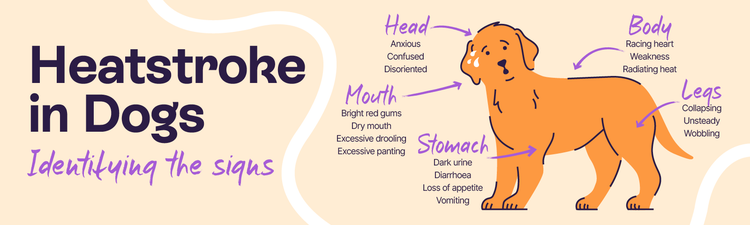
Head
Check your dog’s head and their behaviour. Do they seem:
- Anxious
- Confused or disorientated?
- Lethargic or tired?
These can all be signs of heatstroke and exhaustion. If you notice these behaviours while you are out or exercising, cease all activity immediately and get your dog somewhere shaded to cool off and rest.
Mouth
Check your dog’s mouth and keep an eye out for the following:
- Bright red gums
- Dry mouth
- Excessive drooling
- Excessive panting
All of these things can be a sign of heatstroke in dogs. If you notice any of these signs, then get your dog to cool or shaded area and contact your vet as soon as possible.
Legs
Keep an eye on your dog’s movements. Are they wobbly or unsteady on their feet? Or have they collapsed entirely?
If so, this can be a sign of heatstroke and exhaustion. Make sure to stop any activities and get your dog somewhere they can rest and cool off and have plenty of fresh water available. Also contact your vet for further advice.
Stomach
Keep an eye on your dog’s eating behaviours while it’s hot out, as well as their bathroom habits. If you notice any of the following:
- Lack of appetite
- Dark urine
- Vomiting and/or diarrhoea
Then it could be a sign of heatstroke, exhaustion, or dehydration. Get your dog somewhere cooler with plenty of fresh water, and get in touch with your vet as soon as possible.
Body
Some of the symptoms of heatstroke in dogs are internal and can be easy to miss if your dog is running around and playing. Make sure to check in on their body and feel for:
- Heat radiating from their body
- Racing heart rate
- Any signs of weakness or instability
If you notice any of these symptoms, cease all activity, get your dog somewhere cool, and contact your vet immediately for further advice.
What Cause Heatstroke in Dogs?
Simply put, heatstroke is caused by your dog overheating. A dog’s core temperature tends to be around 37°- 39°, so once their internal temperature pushes past this point, your dog is likely to begin showing signs of heatstroke.
There are a number of things that can cause, most prominently being their environment. Some dogs are not built to withstand high temperatures (particularly those with thicker coats or undercoats), so avoiding situations where they’re most at risk is crucial.
These include:
- Over-exercising, or exercising on hot days
- Being left in a hot vehicle (yes, even if you’ve cracked the window)
- Being in a hot building
To prevent heatstroke in dogs, avoid all the situations mentioned above, especially when the day is at its hottest. Some more tips to prevent heatstroke in dogs include:
- Walking your dog when it’s cooler (morning or evening)
- Use walking harnesses rather than collars. If your dog pulls on its collar, it can restrict its airways and stop it from properly cooling itself down.
- Keep plenty of fresh water on hand when walking during the summer so your dog can stay hydrated.
- Ensuring your dog has a cool spot to retreat to, such as a shaded spot in the garden and the home.
- Give your dog damp towels to lie on, or stroke them with a damp towel. The evaporation of the water acts like sweat in humans and can keep them cool.
- Keep any long-haired or double-coated dogs properly groomed and trimmed so they’re more comfortable in the heat.
Also, familiarize yourself with the signs of heatstroke in dogs so you can act quickly if it occurs.
How to Treat Heatstroke in Dogs
If your dog shows any of the symptoms of heatstroke, you need to contact your vet as soon as possible. Heatstroke in dogs can be extremely dangerous, and sadly, 1 in 7 dogs treated by vets for heatstroke don’t make it. To give your dog the best chance of surviving, follow proper heatstroke prevention measures and contact your vet when something seems wrong.
While you wait for your vet, you can also treat heatstroke in dogs yourself by:
- Stopping all exercise or activity immediately
- Getting your dog out of the sun
- Getting your dog to lie down on a cool surface or floor
- Offer your dog small amounts of water to drink
- Gently pour water over your dog’s body, focusing on the neck, stomach, and inner thighs. Keep doing this until your dog’s breathing returns to normal or your vet arrives.
- Fan your dog with cool air, put them in an air-conditioned room, or place a fan in front of them to try to cool them down. This will work best if your dog is already wet.
By treating your dog yourself while you wait for a vet, you can help prevent or at least slow down the damage caused by heatstroke.
Heatstroke in dogs can occur at any time of the year if your dog gets too hot, but during the summer is when they’re most at risk. By keeping an eye out for the signs of heatstroke and taking all preventative measures possible, you can help keep your dog safe this summer.
If you’re looking for extra ways to help your dog stay cool this summer, then check out our range of cooling products, from cooling mats to cooling bandanas. You’re sure to find something that keeps the heat off.

This post is an opinion and should only be used as a guide. You should discuss any change to your pet’s care or lifestyle thoroughly with your vet before starting any program or treatment. This post was written by a human.
