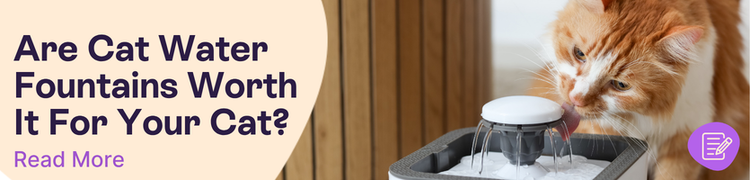
Are Cat Water Fountains Worth It for Your Cat?
If your cat seems more interested in a running tap than their water bowl, you may have considered buying them a water fountain. These fountains keep water circulating, which can appeal to cats that prefer moving water and may encourage some to drink more regularly.
However, a fountain is not automatically better than a traditional bowl, and it will not suit every cat or household. Alongside the initial cost, you will need to consider regular cleaning, replacement filters and whether your cat will actually use it.
So, are cat water fountains worth it? They can be a useful option if your cat enjoys moving water and you are prepared to maintain the fountain properly. However, they are not essential, and many cats will drink perfectly well from a clean, suitably positioned bowl.
In this guide, we’ll explain how cat water fountains work, explore their potential benefits and drawbacks, and help you decide whether one could be right for your cat.
What are the benefits of a cat water fountain?
A cat water fountain can offer several practical benefits, particularly if your cat is naturally attracted to running water. However, every cat has their own preferences, so these are potential advantages rather than a guarantee that your cat will drink more.
1. It may make drinking more appealing
Some cats are attracted to flowing water and may visit a fountain more readily than a bowl. This could be helpful for cats that show an interest in taps, although it does not guarantee that they will drink more overall.
A fountain is only one way to support your cat’s hydration. Their diet, the location of their water and the availability of several drinking stations can also influence their fluid intake.
2. It can hold a larger supply of water
Many fountains have a reservoir that holds more water than a standard cat water bowl. This can be useful in multi-cat households or for cats that drink frequently, as more water is readily available between refills.
3. A filter can collect hair and debris
Where a fountain includes a filter, it may help capture loose hair, dust and small pieces of food before they continue circulating through the water. This can help the water look more appealing between regular cleans.
A filter does not replace regular water changes or thorough cleaning.
What are the potential drawbacks?
A cat water fountain also involves more expense and maintenance than a standard water bowl. These drawbacks do not necessarily mean a fountain is unsuitable, but they are worth considering before deciding whether one is practical for your household.
1. It costs more than a water bowl
Alongside the initial price of the fountain, there may be ongoing costs for replacement filters or parts. Electric models also use a small amount of power, while rechargeable fountains will need charging regularly.
Costs vary between models, so check how often filters need replacing and whether compatible replacements are readily available before making a decision.
2. It requires regular cleaning
Fountains have more parts than a conventional bowl, and residue can collect around the reservoir, pump and filter. They therefore take longer to dismantle and clean, particularly if the design includes narrow or hard-to-reach spaces.
3. The sound or movement may not suit every cat
Even a relatively quiet fountain can produce a low hum, gentle vibration or trickling sound. Some cats may be interested in this, while others could find it unfamiliar and avoid the fountain altogether.
4. It needs a suitable setup
Many fountains require access to a power socket and should be placed on a stable, level surface. Cables need to be positioned safely, and you may also need to protect the surrounding floor from splashes or spills.
Rechargeable models provide more flexibility over placement, but they will still need regular charging.
Are water fountains better than bowls for cats?
Neither option is better for every cat. A water fountain may be more suitable if your cat prefers moving water or regularly shows interest in drinking from taps. A bowl may work just as well if your cat already drinks comfortably and you want a simpler option that is quick to clean and refill.
The most important consideration is whether your cat has consistent access to clean, fresh water. Whichever option you choose, place it somewhere quiet and accessible, away from litter trays and busy areas. Providing more than one drinking station can also give your cat greater choice, particularly in a multi-cat household.
Are cat water fountains safe?
Cat water fountains are generally safe for most cats when they are designed for pets, used according to the manufacturer’s instructions and maintained properly. Regular checks are important because fountains combine water with moving components and, in many cases, electricity.
Check the cable and electrical components
Position cables where your cat cannot chew them or become tangled. Inspect the plug, cable and pump regularly, and stop using the fountain if you notice any damage, exposed wiring or unusual heat. Always unplug it before dismantling or cleaning it.
Place the fountain somewhere stable
The fountain should sit securely on a flat surface where it cannot easily be knocked over. Make sure your cat can approach it comfortably without needing to stretch or adopt an awkward position.
A mat underneath can help catch splashes, but plugs and electrical connections should remain dry. Introduce the fountain while you are present so you can observe how your cat responds to its sound and movement.
Keep it clean and in good condition
Follow the manufacturer’s cleaning and maintenance instructions, and replace any cracked, chipped or worn parts. Damage could create a sharp edge or make the fountain difficult to clean properly.
Provide a backup source of water
If the fountain relies on mains power or charging, provide a separate bowl as a backup. This ensures your cat can still drink if the fountain stops working or needs to be removed for cleaning.
Which material should you choose?
Cat water fountains are commonly made from stainless steel, ceramic or plastic. Each has practical advantages, so the right choice will depend on factors such as durability, weight and how easy the fountain is to dismantle and clean.
Stainless steel
Stainless steel is durable, non-porous and generally straightforward to keep clean. It is less likely to retain odours than some materials and may be suitable if you want a fountain designed for regular use.
However, quality can vary between products, and stainless steel may show water marks or limescale more visibly. Check whether the drinking surface and other removable parts are dishwasher-safe.
Ceramic
Ceramic fountains are usually heavier than plastic or stainless steel models, which can make them more difficult for a cat to move or knock over. Their smooth, glazed surfaces can also be easy to wipe clean.
The main consideration is the risk of chips or cracks. Inspect ceramic components regularly and replace them if damaged, as rough or cracked areas may be harder to clean thoroughly.
Plastic
Plastic fountains are often lightweight and more affordable, with a wide variety of shapes and designs available. Their lower weight can also make them easier to lift when refilling or cleaning.
Over time, however, plastic may become scratched or worn. These areas can be more difficult to clean, so check the surfaces regularly and replace damaged components when needed.
Material is only one consideration. Whichever you choose, look for a straightforward design that comes apart easily and has accessible components.
How to encourage your cat to use a water fountain
A new fountain may be unfamiliar to your cat, particularly if they are cautious around new objects or sensitive to noise. Introduce it gradually and allow them to explore it in their own time.
Keep their usual water bowl available
Do not remove your cat’s existing bowl in an attempt to make them use the fountain. Place the fountain nearby as an additional drinking option so they can investigate it without losing access to a familiar water source.
Once they are confidently using the fountain, you can decide whether to keep both options available.
Let them investigate it while it is switched off
Fill the fountain with fresh water but leave it switched off initially. This allows your cat to become familiar with its appearance and smell before being introduced to the sound and movement.
Avoid placing your cat next to the fountain or trying to make them drink from it. Allowing them to approach voluntarily can help prevent it from becoming a negative experience.
Introduce the water flow gradually
Once your cat appears comfortable around the fountain, switch it on while you are nearby. If the flow is adjustable, begin with a low setting to reduce the sound and movement.
Give your cat space to watch and investigate. Some cats may drink almost immediately, while others may need several days or longer to become comfortable.
Encourage interest without applying pressure
You can praise or reward your cat when they approach the fountain, but avoid repeatedly directing them towards it. Cats are more likely to accept a new drinking source when they can explore it at their own pace.
Use fresh water during the introduction, as an unfamiliar taste or smell could discourage your cat from returning.
Make adjustments if your cat remains hesitant
If your cat avoids the fountain, try changing the flow setting or moving it to another quiet location. The noise of the pump, reflections from the water or activity around its original position may be making them cautious.
Some cats will continue to prefer a bowl despite a gradual introduction. This is not necessarily a concern if they continue to drink normally from another suitable source.
Cleaning and maintaining a cat water fountain
A fountain needs more than an occasional refill to remain hygienic and work properly. The exact cleaning routine will depend on the model, how many cats use it and the manufacturer’s instructions, but the following steps will help you keep it in good condition.
Replace the water instead of continually topping it up
Empty the remaining water and refill the fountain with fresh water regularly. Simply topping up the reservoir can leave older water and residue circulating inside it.
Check the level each day and add water when necessary to prevent the pump from running dry. If you notice hair, food or other debris, replace the water rather than waiting until the next planned clean.
Take the fountain apart for cleaning
Unplug the fountain and separate the reservoir, drinking surface, filter housing and other removable components. Wash each part using the cleaning method recommended by the manufacturer, paying attention to corners and narrow channels where residue can collect.
Rinse everything thoroughly before reassembling the fountain. Only put components in the dishwasher if they are clearly marked as dishwasher-safe.
Clean the pump carefully
Hair and mineral deposits can collect inside the pump and affect water flow. Remove the pump as directed and clean its accessible parts, including the intake and impeller where applicable.
A small cleaning brush can help you reach confined areas without damaging the components. If the fountain becomes noisier or its flow weakens, check the pump and water level before assuming it needs replacing.
Replace the filter when required
Follow the manufacturer’s recommended replacement schedule, as this will vary between fountains and filter types. You may need to change it more frequently if several cats use the fountain or it collects debris quickly.
A filter does not replace cleaning, and continuing to use a dirty or worn filter can affect the water flow and cleanliness of the fountain.
Check for wear, damage and limescale
Inspect the fountain as you clean it, looking for cracks, scratches, damaged cables or worn components. Limescale may also build up more quickly in hard-water areas and should be removed using a method suitable for the fountain’s material.
Do not continue using the fountain if damage could make it unsafe or prevent it from being cleaned thoroughly.
When a change in drinking habits may need veterinary advice
A fountain may encourage your cat to drink more often, particularly when it is first introduced. However, a sudden or unexplained change in their drinking habits should not be assumed to be a response to the fountain.
Contact your vet if your cat:
- Begins drinking noticeably more or less than usual
- Stops drinking or repeatedly avoids their usual water sources
- Produces more or less urine than normal
- Starts urinating outside their litter tray
- Has blood in their urine
- Shows other changes such as reduced appetite, weight loss, vomiting or lethargy
Repeatedly straining to urinate while passing little or no urine requires immediate veterinary attention, as a urinary blockage can be life-threatening. This is particularly important in male cats, although urinary difficulties in any cat need prompt advice.
It can be difficult to measure exactly how much an individual cat drinks from a fountain, especially in a multi-cat household. Instead, look for changes in how frequently they visit it, how often it needs refilling and the amount of urine in their litter tray. Do not restrict their access to water while waiting to speak to your vet.
Frequently asked questions
Should I leave my cat’s water fountain running all the time?
Many fountains are designed to run continuously, but you should follow the instructions for your particular model. Keep the water above the minimum level so the pump does not run dry, and switch the fountain off before cleaning or carrying out maintenance.
What type of water should I use in a cat water fountain?
Use the same fresh drinking water you would normally provide in your cat’s bowl. There is usually no need to use bottled water. Avoid adding flavourings, supplements or other substances unless your vet has specifically recommended them.
Why does my cat’s water fountain feel slimy?
A slippery coating can develop when microorganisms and organic matter form a layer known as a biofilm. Empty and dismantle the fountain, then clean all accessible surfaces and pump components according to the manufacturer’s instructions. If the coating returns quickly, the fountain may need cleaning more frequently.
Can kittens use water fountains?
A kitten can use a suitable pet water fountain, provided they can reach the drinking surface comfortably. Choose a stable design without deep, exposed areas of water, and supervise them when it is first introduced. Keep an accessible bowl available so they always have another way to drink.
Can cats and dogs share a water fountain?
Cats and dogs may use the same fountain, but it must have enough capacity for every pet and may need more frequent cleaning and refilling. Providing additional water bowls or fountains also helps prevent one animal from limiting another’s access.
A cat water fountaincan be worthwhile if your cat enjoys using it and you can maintain it consistently. If not, a suitably placed bowl of fresh water remains an equally valid choice.
This post is an opinion and should only be used as a guide. You should thoroughly discuss any change to your pet’s care or lifestyle with your vet before starting any program or treatment. We update content regularly to reflect the latest pet health standards.

Hannah Griffiths
Senior Marketing Manager
Hannah Griffiths is the Senior Marketing Manager at Pet Drugs Online, overseeing content strategy and customer engagement initiatives. She is passionate about making pet health information accessible and easy to understand. Hannah collaborates closely with Pet Drugs Online's veterinary team, including Sarah Page-Jones, to help ensure all content is accurate, trustworthy and aligned with current veterinary best practice.